
By Ally Wang
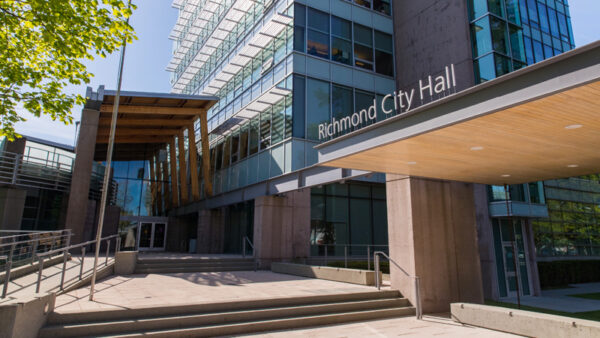
On the evening of July 27, 2026, Richmond City Council passed a motion addressing what it described as discriminatory messaging recently published on social media. The motion called for the City, on behalf of Richmond residents, to request a formal apology from the person who authored the post; to take a clear public stance condemning this type of messaging; and to forward the matter to the BC Human Rights Tribunal for review.
The person at the center of the controversy was Richmond resident Yi (Jason) Liu. The matter arose from an inaccurate AI-generated illustration used to accompany a Chinese-language article he posted on WeChat encouraging Chinese Canadians to vote. After recognizing that the image was inappropriate, Liu removed it and publicly apologized on Chinese-language platforms before the matter was reported in the English-language media. He subsequently apologized again in an English-language interview. Two days after the English-language media coverage appeared, City Council nevertheless proceeded with the motion.
As the controversy continued to unfold, many people expressed dissatisfaction with the direction it had taken. As a frontline volunteer who has been involved in anti-discrimination work since the COVID-19 pandemic, I have found myself reflecting on the matter from a somewhat different perspective.
Before proceeding, I want to make clear that this article is not intended simply to support or oppose either side, nor is it directed against any ethnic community or ideology. Rather, these are personal observations and questions raised by a Canadian citizen who has been involved in anti-discrimination work for many years.
As a Canadian citizen, I believe that good-faith and reasoned discussion of public affairs is an essential part of the freedom of expression and democratic participation that Canadian society values. This article recognizes and supports City Council’s stand against racial discrimination, while also raising questions about procedural fairness, factual determination, freedom of expression, and the boundaries of public participation. My hope is that these issues can be considered rationally and in their full context.
- Richmond’s heightened sensitivity and responsiveness to alleged racial discrimination deserve recognition
Without first deciding whether the article at the center of this controversy actually constituted racial discrimination, I believe the City’s response to an allegation of racism is, in itself, worthy of recognition—particularly when compared with what we witnessed only a few years ago.
At the end of April 2020, Global News published an article by journalist Sam Cooper concerning donations of personal protective equipment to China by Chinese communities around the world during the early stages of the COVID-19 pandemic. Drawing on numerous sources, the article portrayed these grassroots donations as having been mobilized under secret direction from the government of the People’s Republic of China.
When the story was first published, it was accompanied by an illustration depicting a giant hand from above manipulating a group of Asian young people below. Many Chinese Canadians who had participated in PPE donations to China questioned the article’s framing and expressed anger over the illustration.
For months afterward, community members communicated with the media, sought legal assistance, and contacted elected officials in the hope that the matter would be acknowledged and addressed. Ultimately, the media outlet removed the illustration. But we did not see any level of government, elected official, or municipal council publicly address the incident, much less respond with the speed, clarity, and institutional weight we are seeing today.
The March 2021 incident at a coffee shop at Richmond’s Fisherman’s Wharf—widely remembered in the Chinese community as the “coffee-throwing incident”—has also been frequently mentioned in recent discussions.
As a frontline volunteer who followed that case closely at the time, I would like to briefly recount the extent to which Richmond’s municipal elected officials became involved.
Throughout the protests and public events surrounding the case, the City and members of Council did provide some support. At the first press conference, Mayor Malcolm Brodie attended and spoke, while Councillors Chak Au and Alexa Loo were also present. At the second press conference, Councillor Au spoke on behalf of an anti-discrimination coalition with which he was involved. At the third, Councillors Andy Hobbs and Au attended and spoke. Later, after the matter entered the court process, Councillor Au occasionally attended court proceedings as an observer.
However, during several protests in Richmond, anti-discrimination volunteers were openly subjected to anti-Chinese abuse, including remarks such as “Go back to China,” comments about their “shit-coloured skin,” and “I hate Chinese people.” Several Chinese Canadian journalists at the scene were verbally abused and physically assaulted because of their ethnicity, and one had a cellphone smashed.
The case continued for 19 months and received more than 120 reports in Chinese- and English-language media. Yet these incidents did not prompt a response or intervention from Richmond City Council comparable to what we have witnessed in the present case.
In fairness, that lack of response must also be understood in the social context of the time. During the pandemic, Vancouver was at one point described by Bloomberg as the “anti-Asian hate crime capital of North America.” Anti-Asian incidents, particularly those targeting people of Chinese descent, seemed relentless. Richmond was especially affected, with frequent reports of verbal harassment and physical attacks.
Few of those incidents elicited responses from the City of Richmond, and certainly nothing resembling the clear and unified public position taken by Council in the present controversy.
For that reason, when I watched the Council meeting and saw several elected officials speaking with evident indignation and in unusually forceful terms, I could not help but feel that times had changed. The City of Richmond appears considerably more sensitive to issues involving racial discrimination than it was several years ago, and more willing to take a public stand.
For that, I give the City credit.
I sincerely hope, however, that this heightened responsiveness becomes a lasting and consistently applied principle—one under which every community affected by racism receives the same degree of seriousness, fairness, and concern.
- Questions raised by the present case
What deserves public discussion here, in my view, extends beyond the question of who was right or wrong.
Richmond is one of Canada’s most multicultural cities, with Chinese Canadians making up more than half of its population. If this controversy can help us better define the boundaries among public discourse, freedom of expression, anti-racism, and procedural fairness—and help establish more mature, consistent, and transparent standards for public deliberation—then something constructive may emerge from it.
Clearer, fairer, and more predictable procedures would benefit City Council whenever it deals with matters involving ethnicity, expression, and the public interest. In that sense, the significance of this incident could ultimately extend well beyond the immediate controversy, contributing to stronger community trust, better democratic governance, and healthier multicultural coexistence.
The first question concerns procedural fairness.
Richmond City Council’s intention to preserve community cohesion and oppose racism deserves recognition. But, as Yi Liu himself asked in his public statement, from the standpoint of procedural fairness and good public governance, when a motion concerns an identifiable resident, seeks a formal apology from that person, and calls for the matter to be forwarded to the BC Human Rights Tribunal for review, should that person be notified before the motion is introduced and voted upon?Should he have been given an opportunity to explain or respond? Before speaking and voting, had councillors read the article in full, rather than relying on excerpts, summaries, or other people’s characterizations of it?
The second question is whether an inaccurate illustration that had already been withdrawn should be treated as indistinguishable from the purpose and content of the article itself.
Liu has acknowledged that he used an AI-generated image without adequately reviewing it. He has described that as his mistake. Once he recognized the problem, he removed the image and publicly apologized before the Council motion was passed. He has not attempted to evade responsibility for that error. At the same time, he maintains that the image did not represent the position of the article itself. According to him, the article’s actual purpose was to encourage eligible voters to register, vote, and participate in the democratic process.
If that is indeed the case, then whether the article itself constitutes racial discrimination within the meaning of the British Columbia Human Rights Code should be determined on the basis of the relevant facts and applicable law, rather than through the unilateral conclusion of any one party. Should we distinguish among a moral judgment, a political condemnation, and a legal determination?
An image may reasonably be regarded as inappropriate, offensive, or visually suggestive of ethnic confrontation. But whether those assessments are equivalent to a finding of racial discrimination in law is a separate question—one that should be determined by applying the relevant legal standards to the facts.
The Council discussion itself makes this distinction particularly worth examining. Much of the discussion focused on the image. Councillor Carol Day described it as a “ridiculous cartoon,” while another councillor characterized the graphic as particularly disturbing. At the same time, one councillor also criticized Liu’s subsequent explanation of the image, arguing that it continued to frame political participation in racial terms. The discussion therefore extended beyond the image alone, but the image clearly occupied a central place in Council’s deliberations.
That makes it all the more important to ask precisely what was being judged: the image, the author’s subsequent explanation, the article as a whole, or some combination of the three.
The third question concerns the actual reach and impact of the image.
The image originally appeared only as an illustration accompanying a Chinese-language article on WeChat. What was its original circulation? How many people actually saw it, and what measurable social impact did it have before the controversy expanded?
The fact that the author removed the image and apologized does not mean that public institutions were prohibited from discussing the matter afterward. But once the mistake had been acknowledged and corrected, another set of questions arises. Through what channels did the image move from a Chinese-language WeChat article into the English-language media and subsequently into the attention of City Council? Through what channels was it then displayed and circulated further, ultimately receiving attention far beyond its original audience?
Does repeatedly making the image the centrepiece of the controversy actually reduce racial division? Or could the process itself have resulted in many more people—who otherwise would never have seen the image—being exposed to it, thereby amplifying the controversy and generating additional misunderstanding and resentment between communities?
If the objective is to reduce hatred and strengthen social cohesion, then we should also ask what response to an already withdrawn and apologized-for image is most conducive to repairing relationships rather than perpetuating conflict.
The fourth question concerns Kash Heed, who, according to public reporting, had already stated that he did not believe the article violated election law and that he was not demanding either an apology or the removal of the article. Of course, an individual’s decision not to pursue a matter does not determine whether City Council may legitimately discuss an issue of public concern. But his position nevertheless raises another question worth examining. If the person directly depicted or affected had already expressed that view, what subsequently brought the matter before City Council and resulted in a formal motion?
What was the basis for the motion? Who provided the relevant materials? How did councillors understand the relationship between the article and the image? These questions concern the public decision-making process. Greater disclosure and public explanation could help residents understand how the matter developed and reduce the space for speculation.
The controversy has also prompted a broader question among many members of the Chinese Canadian community: How can we participate confidently in public debate in the future?
For years, governments and community organizations have encouraged Chinese Canadians to become more involved in public affairs and have urged Asian Canadians not to remain a “silent minority.” Yet in recent years, Chinese Canadian residents who spoke publicly at candidate meetings have sometimes faced allegations or suspicions that they were acting on behalf of foreign interests. Now we have the Yi Liu controversy.
Where are the boundaries of legitimate public discourse? What forms of expression fall within the protection of freedom of expression? This does not mean that speech made in the name of public participation should be immune from criticism. Citizens have the right to express themselves, and other citizens, journalists, and elected officials have an equal right to criticize and respond.
The issue that needs clarification is how an appropriate boundary—and an appropriate degree of proportionality—should be maintained among public criticism, political condemnation, and the use of formal governmental processes.
This incident also offers an opportunity to consider a broader principle: determinations of racial discrimination should rest on consistent and equitable standards, rather than standards that shift depending on who is involved or the context in which an issue arises.
For example, some recent Canadian mainstream-media reports concerning allegations that a Canadian intern at NATO headquarters was involved in espionage specifically emphasized that the individual was of “Chinese origin.”
Was that detail necessary? Could emphasizing a person’s ethnic origin in that context inadvertently reinforce stereotypes about an entire community? And should questions of that kind receive the same serious consideration from elected officials and the broader public as the concerns raised in the present case?
- Looking Ahead
A mature democracy is not a society without controversy. It is one that uses controversy to improve institutions, clarify rules, and build trust.
Only when that happens can every resident—regardless of ethnicity or point of view—participate in public affairs with confidence, without losing the courage to speak because they fear the consequences of expressing an opinion.
Opposing racial discrimination must go hand in hand with procedural fairness, a complete understanding of the facts, and consistent standards. Only then can anti-racism genuinely protect every community, safeguard social harmony in Canada, and encourage more residents to participate confidently in public life.
I respectfully urge everyone reading this article to take an active interest in Canadian public affairs and to participate more fully in our democracy.
And I especially encourage every eligible Canadian voter to cast a ballot in municipal, provincial, and federal elections.
Your vote matters. Every vote counts.
British Columbia’s 2026 general local elections will be held on October 17, 2026. Please consult your municipality’s official website for information about advance voting dates and local voting arrangements.
For further information, please consult the Province of British Columbia’s official resources on local elections.