
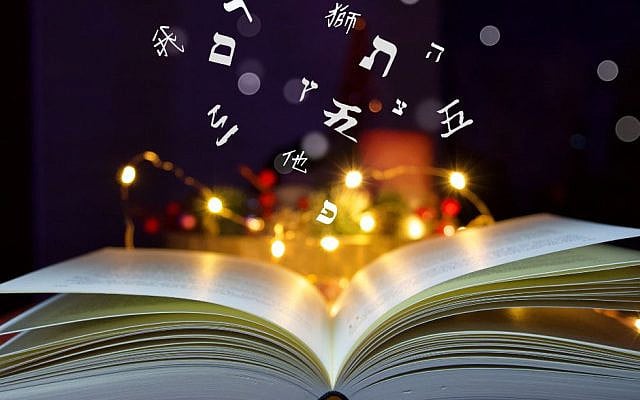
In North America, May is a time of cultural celebration, honoring both Jewish Heritage and Asian Heritage. It is a good time to reflect on the camaraderie and shared resilience of two ancient communities: Jewish and Chinese.
A few years ago, amid a disturbing rise in anti-Asian hate during the pandemic, nearly 100 Jewish organizations publicly expressed solidarity with the Chinese-American community. Jews visited Chinatowns, marched in support, and stood together against hate—not just as allies, but as kindred spirits.
These acts of solidarity aren’t mere political gestures. They reflect a deeper connection between two ancient civilizations—rich in heritage, shaped by struggle, and grounded in enduring values. From a shared reverence for tradition, family, education, and ancestral homeland, to parallel experiences of marginalization despite excellence, the Jewish and Chinese communities have much in common.
But this relationship runs even deeper than shared experience. It offers a profound opportunity—especially this month—to explore overlapping philosophies, healing traditions, and cultural wisdom. In upcoming blogs, I’d like to go beyond the inspiring historical alliances, and explore the rich overlay of teachings from both worlds. From Kabbalistic and Taoist cosmologies, to insights from Chinese medicine and Jewish mysticism, to parallel views on ethics, the soul, and the body—there is a vast reservoir of knowledge waiting to be discovered at the intersection of these two cultures.
Still, history offers a meaningful starting point. One powerful story begins with Dr. Ho Feng Shan, the Chinese consul general in Vienna during the Holocaust. Between 1938 and 1940, Ho defied orders from his superiors and issued thousands of life-saving visas to Jews desperate to flee Nazi Germany. These visas provided a lifeline to Shanghai, then an open port city that required no immigration paperwork. Though under Japanese occupation, Shanghai became a haven for Jews escaping Europe.
Ho’s rescue efforts were quiet, determined, and deeply personal—he even paid for a new consulate office out of his own pocket after the Nazis seized the original. His family only discovered the full extent of his heroism after his death, when a journalist researching Holocaust-era diplomats prompted his daughter, Manli Ho, to investigate further. She retraced his actions and eventually traveled to Israel to accept a posthumous honor from Yad Vashem.
Survivors remember him well. Eric Goldstaub was 17 when he and 19 family members received visas to Shanghai. They were welcomed warmly by the Chinese consulate. He spent a decade in Shanghai before moving to Toronto. Similarly, Dr. Sonja Poizner, who later became a Toronto-based psychologist, never forgot the man who saved her family. She lived in the Jewish ghetto in Shanghai as a child before eventually relocating to Canada.
These stories are moving, not just because of the rescue but because of the deep relationships that followed. Holocaust survivor Gary Matzdorff, for example, returned to Shanghai in 1983 to visit the neighborhood where he once lived. There, a young man named Zhenhong (later Jerry Chen) noticed him, offered directions, and ended up walking with him for hours. Their bond led to a lifelong friendship. Matzdorff eventually sponsored Jerry to study in the U.S., referring to him affectionately as his “Chinese son.”
These connections aren’t relics of the past—they’re a reminder of what’s possible. In times like ours, when fear and division are widespread, it is both wise and necessary to rekindle bonds with those who share a reverence for life, wisdom, and human dignity.
And so, in this blog, I’ll be diving deeper—not only into the inspiring stories of friendship between Jews and Chinese, but into the soul of both cultures. We’ll explore how Jewish and Chinese traditions approach healing, balance, morality, and the nature of the human being. We’ll look at how Taoism and Kabbalah mirror one another’s views of energy, flow, and transformation. We’ll explore how both traditions use storytelling, symbolism, and sacred texts to guide moral development and foster resilience.
As we confront new challenges, let’s celebrate not just survival but meaningful alliance. Let’s remember a friendship built on mutual respect and shared priorities—a partnership that lifted people out of darkness and into light. And let’s continue to nourish that friendship, drawing on the spiritual and intellectual riches of both worlds.
Because in times of chaos, nothing is more powerful than the light of two ancient peoples walking forward together—with wisdom as their guide.
- The Times of Isreal first published the article.
- Annette Poizner is a Columbia-trained social worker, therapist, writer, and lifelong seeker.
Disclaimer
Voices & Bridges publishes opinions like this from the community to encourage constructive discussion and debate on important issues. Views represented in the articles are the author’s and do not necessarily reflect the views of the V&B.