
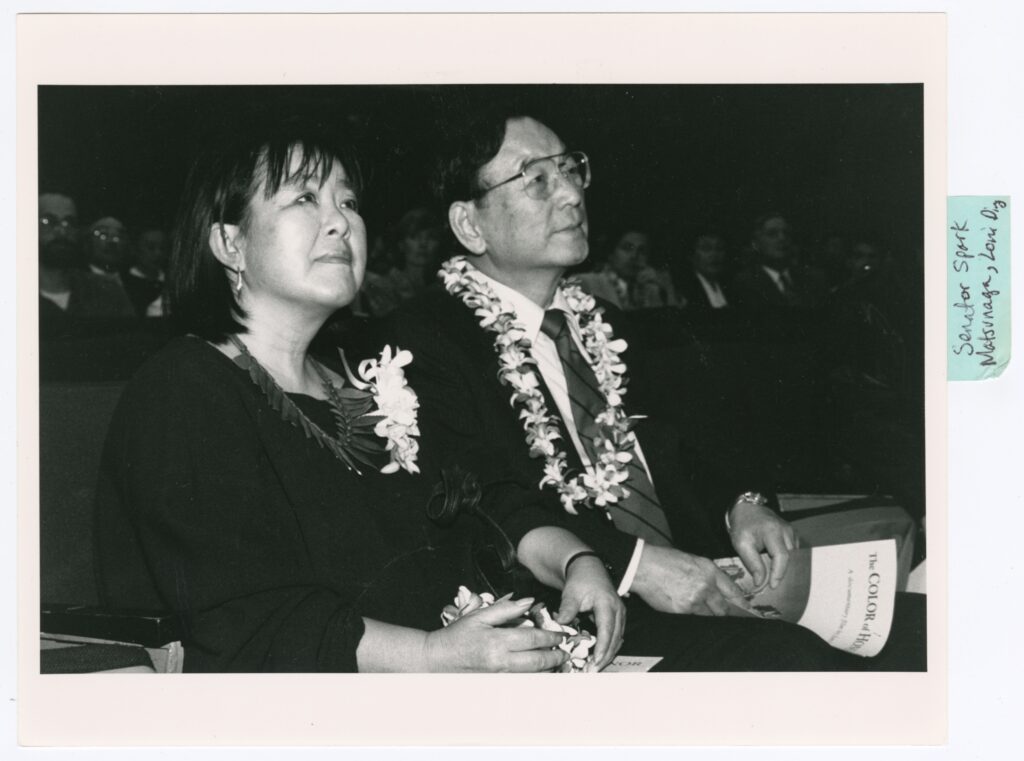

By Michelle Okawa, Densho Encyclopedia Graduate Intern.
In 2014, Densho received an extensive collection of materials from the family of acclaimed filmmaker Loni Ding. This collection included hundreds of media that were produced by Ding to create documentaries on the experiences of Japanese American soldiers during World War II. Over the past several years, the Densho Archives Team has worked tirelessly to process and digitize these materials. We are thrilled to announce their addition to the Loni Ding Oral History and Film Research Collection, now available in the Densho Digital Repository.
These valuable materials reveal much about the filmmaking process, including the meticulous steps involved in creating a documentary from start to finish. This article spotlights the work that went into creating two of Loni Ding’s most influential films, Nisei Soldier: Standard Bearer for an Exiled People(1984) and The Color of Honor: The Japanese American Solider in WWII(1987). Both films, among the first to be created on the subject of Nisei soldiers, were critically acclaimed and widely viewed by audiences.
Brief Biography of Loni Ding
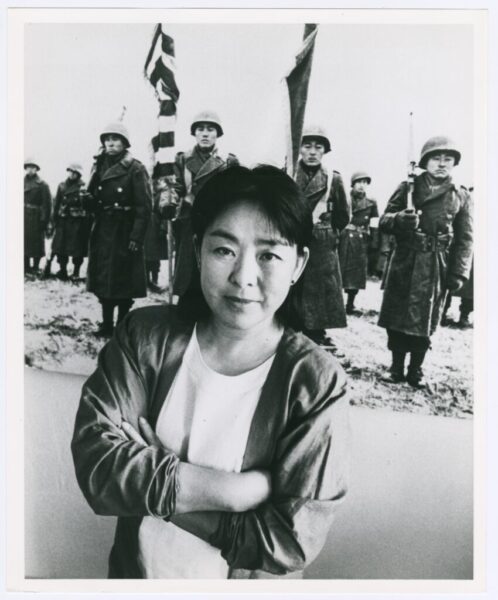
Loni Ding (1931–2010) was a Chinese American filmmaker, educator, and activist based in San Francisco. With a career that spanned over 30 years, she created more than 250 programs for broadcast, including many centering Asian American stories. With a doctorate in Sociology, Ding held numerous positions teaching students about filmmaking. She also helped co-found the Center for Asian American Media (CAAM), an organization dedicated to advancing Asian Americans in independent media.1 With such a long illustrious career, Loni Ding has been referred to as the “Godmother of Asian American Documentary Filmmaking.”2
Making a Documentary: A Behind-the-Scenes Look at Nisei Soldier and The Color of Honor
At the time of its release in 1984, Nisei Soldier was one of the first films to focus on Japanese American men who volunteered to serve in military combat during World War II. Ding spent over two years developing this documentary after being inspired by attending the Commission on Wartime Relocation and Internment of Civilians (CWIRC) in 1981. Archival footage gathered from the National Archives, still photographs from the Presidio Army Museum, and oral interviews with Nisei veterans were vital components that went into making the film.Reception was positive, with a screening shown to members of Congress, arranged by California Representatives including Norman Mineta. Motivated by this positive reception, Ding started working on an expanded version of this film by focusing on Nisei who served in the US Military Intelligence Service (MIS) in the Pacific. 3
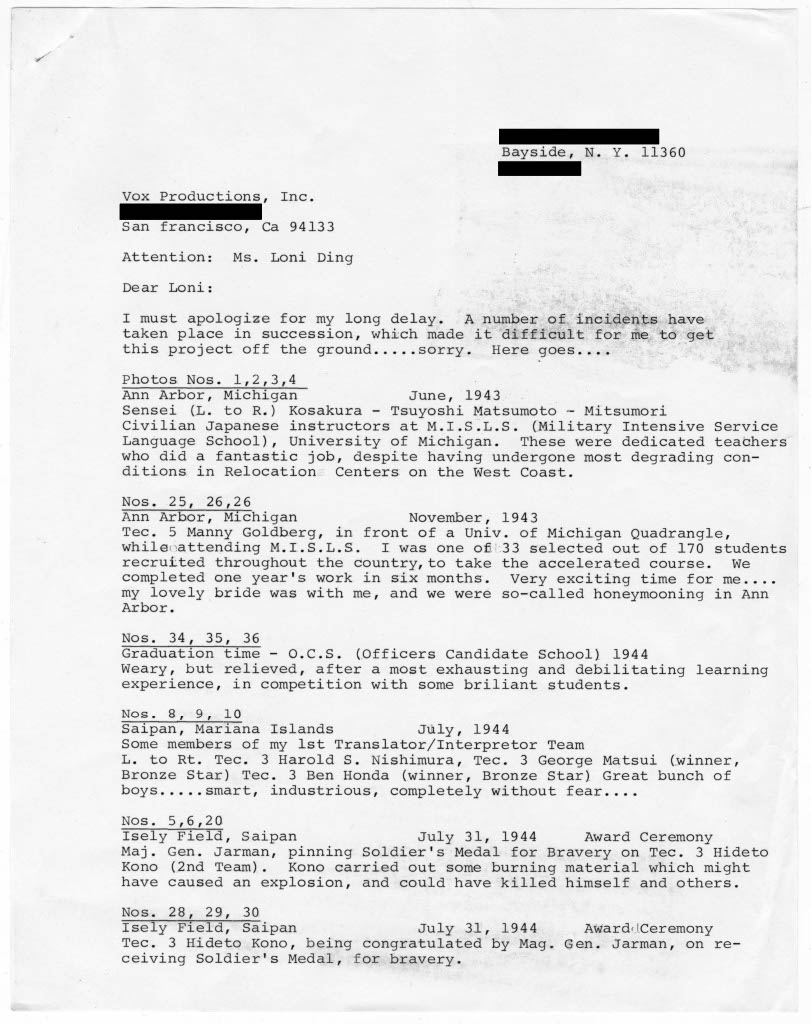
Following the release of Nisei Soldier, Ding’s network among the Japanese American community and beyond continued to expand. Correspondence sent to Ding by fellow academics, historians, interview subjects, community leaders, military personnel, and more, demonstrated the wide scope of her connections that would become foundational for her next film, The Color of Honor. The Loni Ding collection reveals how she enlisted help from the community she had built during production of Nisei Soldier to provide source material for her upcoming work. Examples can be found below with a letter sent by retired United States Army Colonel, Lachlan Maclean Sinclair, where he recommends that Ding contact an Army General and offers additional resources for her research.4 She also consulted with Manny Goldberg, a former member of MIS that served with Nisei soldiers in Iwo Jima and Saipan, to request his expertise identifying photographs.5
For The Color of Honor, Ding conducted extensive oral interviews with nearly eighty people in Hawai’i, Japan, and across the continental United States.6 A complete list of these oral interviews are available to view online through the Densho Digital Repository, including several recognizable individuals who have passed away, such as John Aiso, Frank Emi, and Harry Fukuhara.
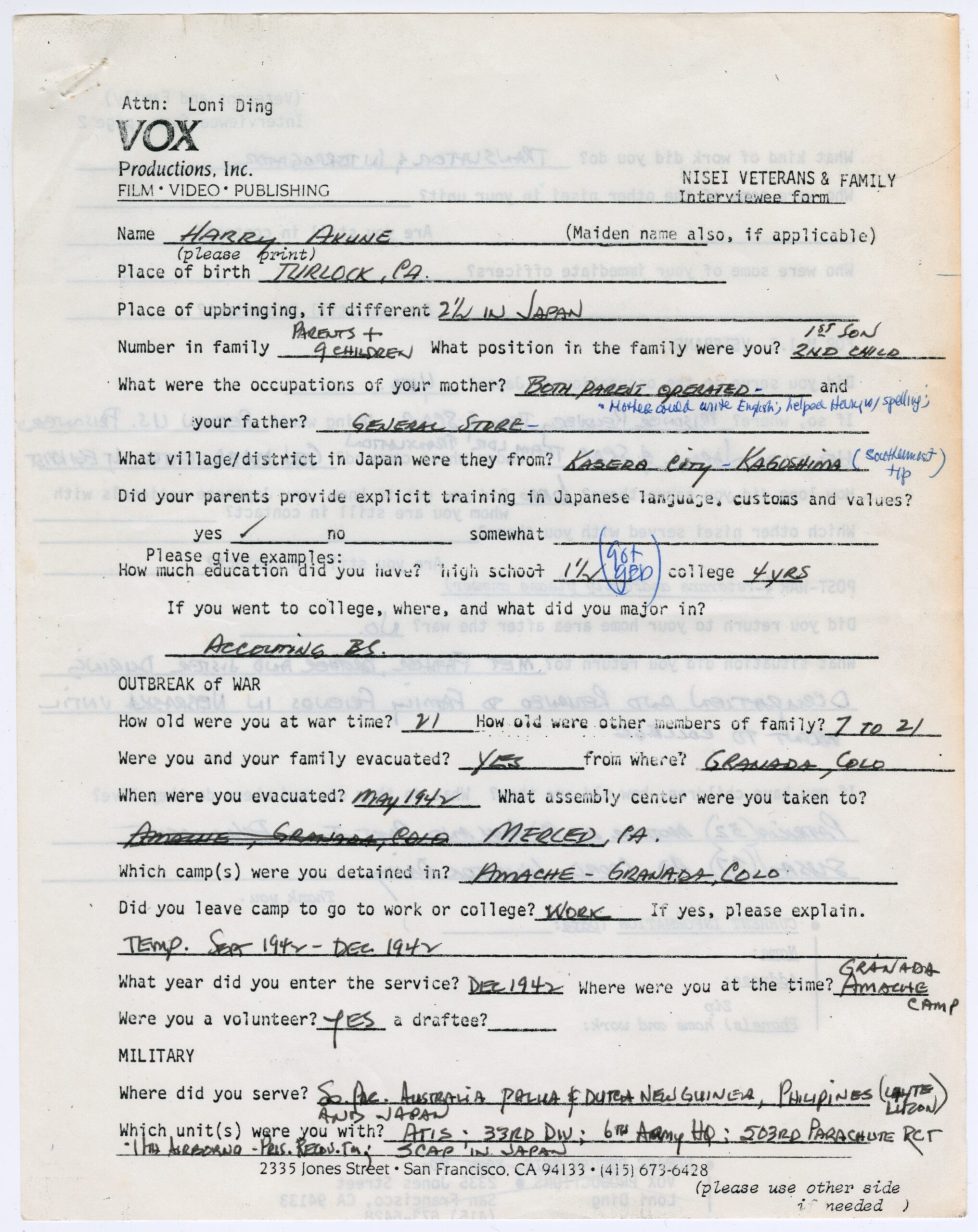
During the interview process, Ding provided Nisei veterans and their families with a questionnaire to help gather information about their background. The example below shows the responses provided by Harry Akune, who volunteered to join the military as a translator and interrogator in the South Pacific and the Philippines. Akune’s responses in the questionnaire are provided in black ink, while additional notes from Ding have been added in blue ink following the interview. 7
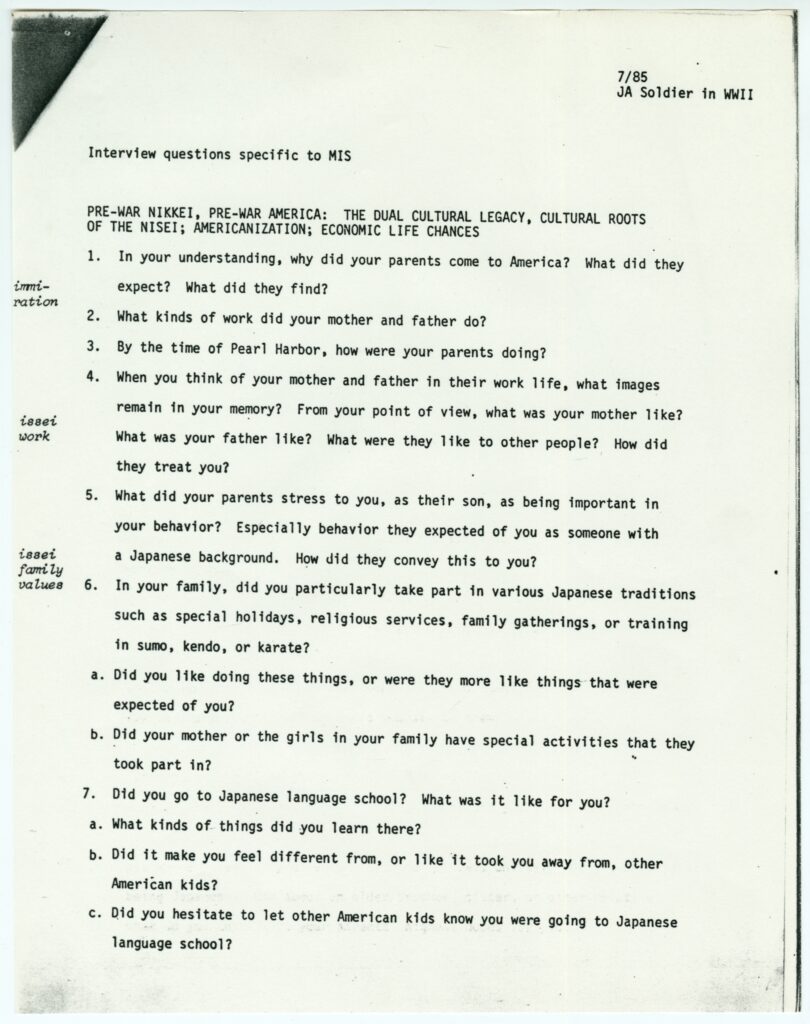
An additional resource found in the Loni Ding Collection includes a list of “interview questions specific to MIS” that were asked during the oral interview.8 While the questionnaire is meant to ask more straightforward questions identifying place of birth or concentration camp, the interview questions themselves engage with more complex themes, such as immigration, family values, and work ethic. When examined together, both the questionnaire and interview questions help to cover any potential gaps in research. For example, the questionnaire can assist in providing the filmmaker with quick access to background information, as this was shot during the 1980s it may have taken longer to review the footage from each shoot.
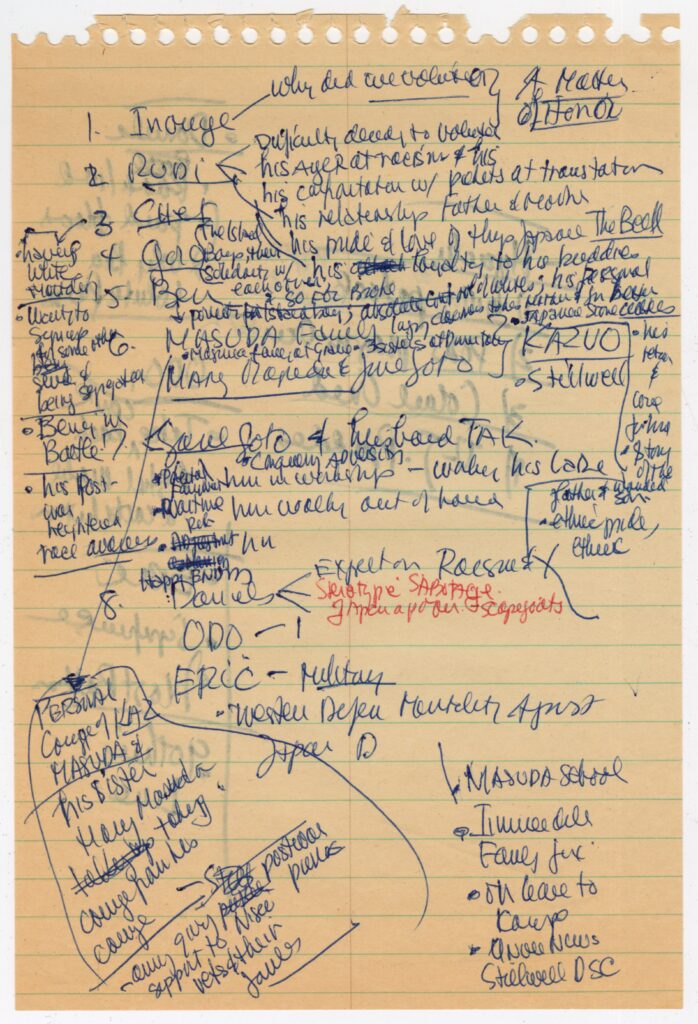
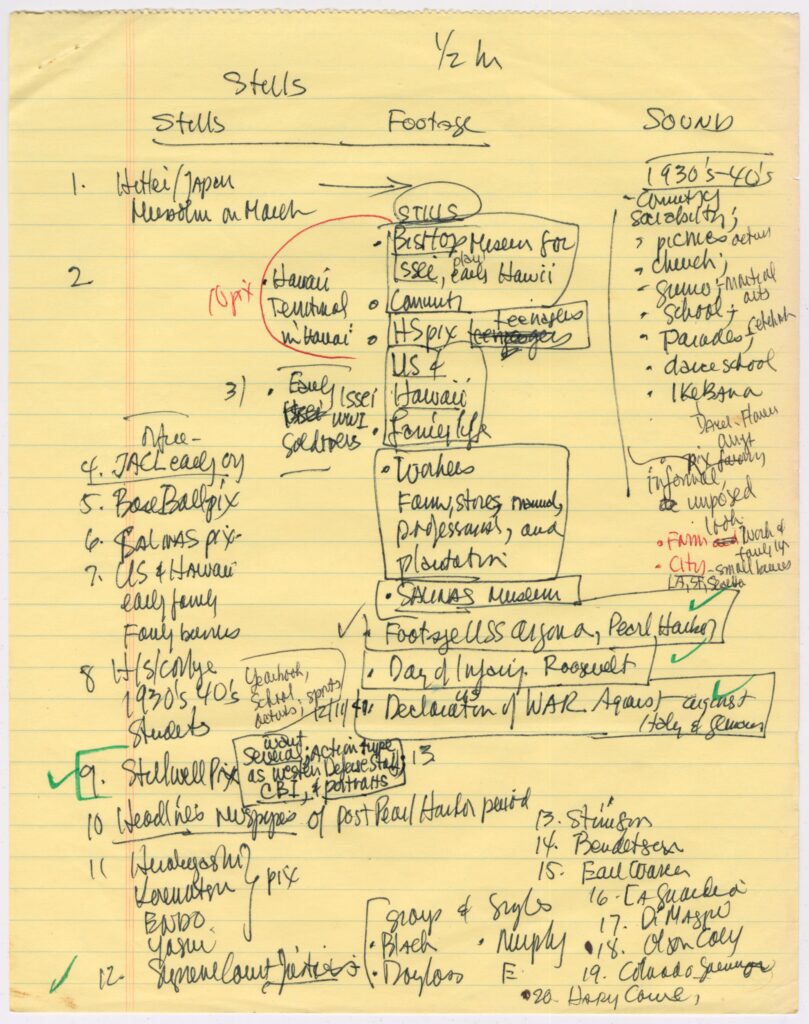
Further insight into Loni Ding’s brainstorming and notes taken during the preproduction process can be found in the following pages from this collection. These notes would represent the early phases of planning of what would eventually become the documentary, The Color of Honor. While these notes may appear at times undecipherable and chaotic, they demonstrate the extensive level of research and planning required to prepare for the film.
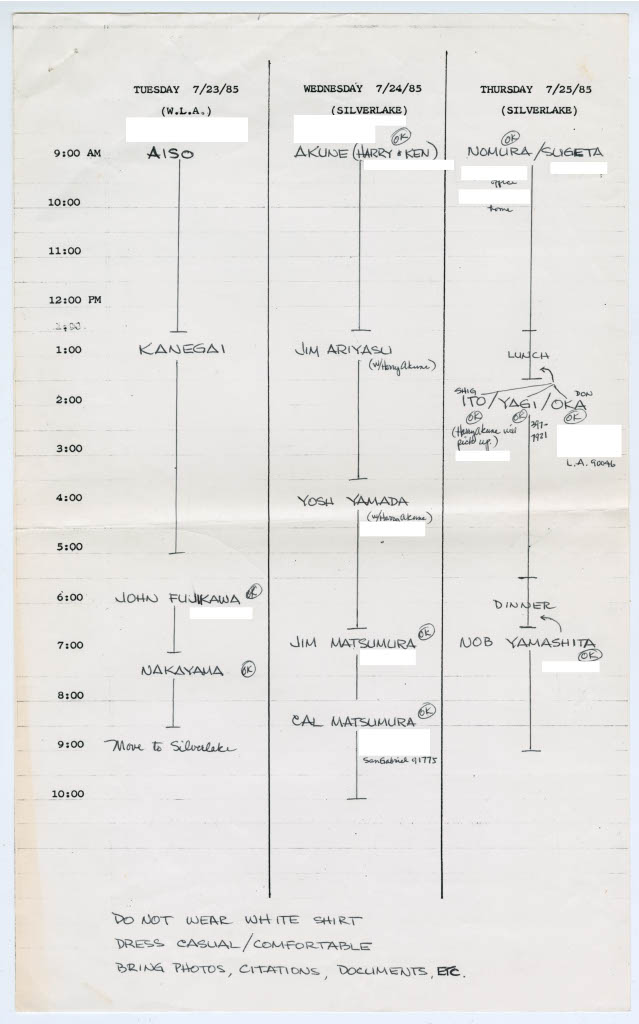
In addition to showing the process of gathering oral interviews and conducting research for preproduction, the Loni Ding Collection offers a behind-the-scenes look at the meticulous planning required to coordinate a film schedule. Ding’s crew often worked at a frantic pace by filming multiple interviews a day across various locations. The image below shows a Los Angeles shooting schedule that could include up to five interviews filmed throughout the day, concluding with a company move in the evening from West Los Angeles to Silverlake. As noted in the bottom left-hand corner of the page, interviewees were often instructed on their wardrobe and reminded to bring materials for documentation.
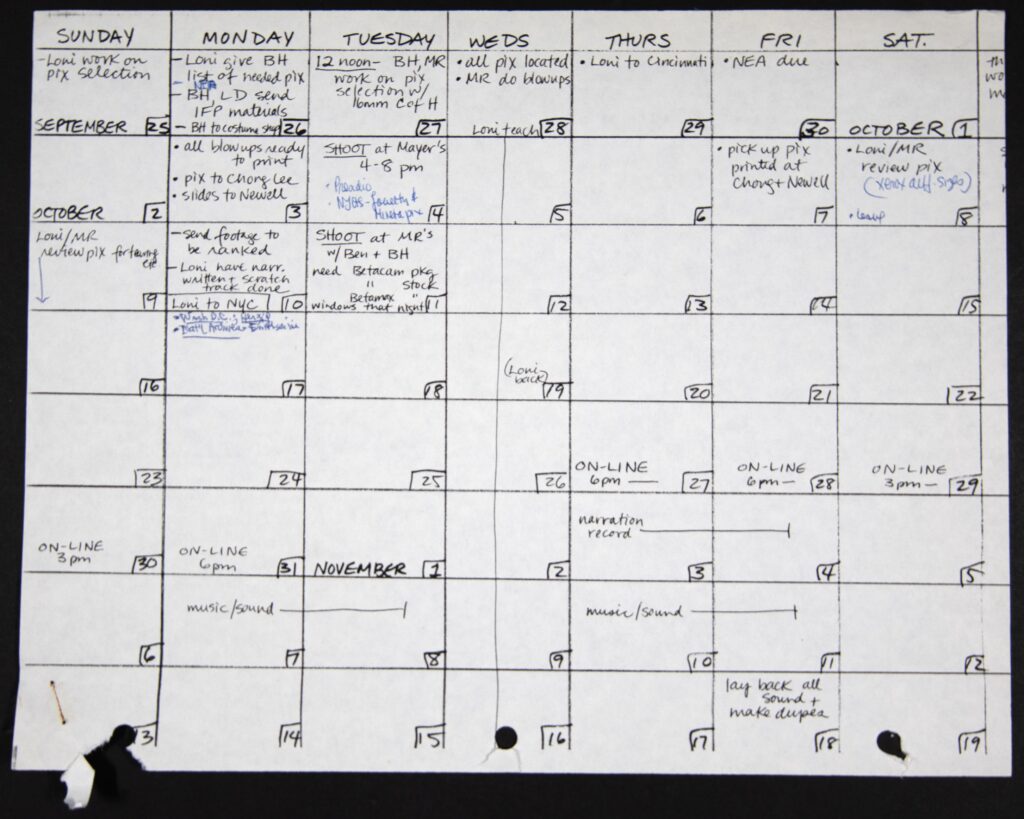
Alongside this three-day schedule is a longer month calendar showing how Ding often traveled between different cities while completing larger tasks for the documentary. Many materials such as these can be found in the Loni Ding collection, that further demonstrate the filmmaking process which can include narration and editor notes.
Loni Ding’s Lasting Legacy
Both films Nisei Soldier and The Color of Honor were shown to Congress as part of a debate on Redress legislation of what would eventually become the Civil Liberties Act of 1988. The fact that Ding retained newspaper reviews of her films demonstrates her care in understanding how her work was being received by the public. Many of her films were widely viewed in national PBS broadcasts, and during the 1980s, she testified before a US Senate subcommittee to increase funding for independent productions in public broadcasting.9
The impact of Loni Ding’s work for Japanese Americans and Asian American filmmaking is undeniable. We invite viewers to learn more about the work and legacy that lives on in the newly digitized Loni Ding collection.
(By Densho)