
Some of these made the textbooks. The worst parts didn’t.
American history classes spend a lot of time on a relatively short list of events, like the Revolution, the Civil War, the World Wars, and a few civil rights milestones. What gets cut, glossed over, or quietly skipped is often where the real story is, from the massacres and experiments to the broken promises and policies that shaped entire communities — and were then left out of the textbooks. So, here are 13 dark facts about American history that most of us were never taught in school:
1. On October 24, 1871, a mob killed at least 17 Chinese men and boys in Los Angeles in roughly two hours — more than 10% of the city’s Chinese population — in what is still considered one of the largest mass lynchings in American history. Eight men were convicted. Every conviction was overturned on a technicality.

In 1871, Los Angeles was a frontier town where Chinese immigrants were vital to the labor force but were denied the right to vote or testify in court against white people. After a shootout between rival Chinese mutual benefit associations left a white rancher named Robert Thompson dead, a mob of roughly 500 white and Latino Angelenos — about 10% of the city’s population — descended on the Chinese quarter along Calle de los Negros.
Within about two hours, at least 17 Chinese men and boys were shot, hanged, and mutilated. Most had nothing to do with the original conflict. Fifteen were lynched from a wooden awning at John Goller’s wagon shop and from Tomlinson’s corral. One of the victims was Dr. Chee Long “Gene” Tong, a respected herbalist who reportedly begged for his life and offered his diamond ring. A rioter cut off his finger to take it. The dead represented more than 10% of LA’s Chinese population of 172.
A grand jury issued 25 indictments. Only 10 men stood trial, and 8 were convicted of manslaughter. In 1873, the California Supreme Court overturned every conviction because the indictment had failed to explicitly state that Dr. Tong had been “murdered.” Because the law at the time barred Chinese people from testifying against white defendants, the victims’ community had no legal voice in the proceedings. District Attorney Cameron Thom declined to retry the case. No one served meaningful time.
Sources: Britannica, Los Angeles Public Library, LA Civic Memory
2. On September 2, 1885, a mob of 150 white miners in Rock Springs, Wyoming, killed at least 28 Chinese coal workers, burned all 79 homes in the town’s Chinatown, and threw wounded survivors into the flames. The Chinese miners had been paid less than white workers for the same work, and the company that created those conditions faced no consequences. Neither did anyone else.
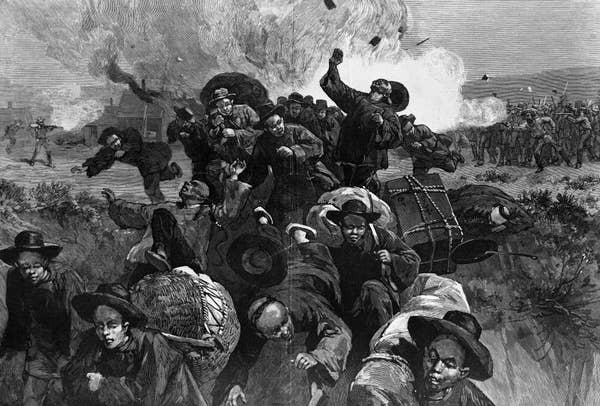
At the Union Pacific coal mines in Rock Springs, Wyoming Territory, the company paid Chinese miners less than white miners and used them to undercut strikes organized by white workers through the Knights of Labor. On September 2, 1885, a dispute over who had the right to work a rich coal seam in Pit No. 6 turned violent. That afternoon, an armed mob of about 150 white miners surrounded Rock Springs’ Chinatown and gave residents one hour to leave, then attacked before the hour was up.
By nightfall, at least 28 Chinese miners were dead, 15 were wounded, and all 79 homes in Chinatown had been looted and burned, with some wounded victims thrown back into the flames. Several hundred Chinese fled into the surrounding hills. Property damage totaled roughly $150,000 (about $4.8 million today).
Sixteen men were arrested. A Sweetwater County grand jury declined to indict, declaring it could find “no one … able to testify to a single criminal act committed by any known white person that day.” When the men were released, they were greeted with what the New York Times called “a regular ovation.” Union Pacific fired 45 of the white miners but rehired most of the Chinese survivors at federal-troop bayonet point a week later, ordering them back to work or be blacklisted across the entire UP system. The government sent troops not to arrest the killers but to get the railroad’s labor force back. No one was ever prosecuted.
Sources: WyoHistory, Library of Congress, History
3. Between the early 1900s and the 1930s, tens of thousands of young Filipino men were recruited to work American farms as US colonial subjects — then trapped by laws that barred them from marrying, owning land, or becoming citizens. An entire generation grew old alone. And the man who started the Delano Grape Strike before Cesar Chavez joined wasn’t added to California’s school curriculum until 2015.
After the 1898 Spanish-American War, the United States took control of the Philippines. Because it was a US territory, Filipinos were classified as “US nationals.” They carried US passports and could travel freely to fill the labor demand on California farms, Washington fields, and Alaska salmon canneries. They became known as the manong generation — “manong” meaning “older brother” in Ilocano.
But when the Great Depression hit in the 1930s, white workers saw them as competition. The US solved this with the 1934 Tydings-McDuffie Act, which promised the Philippines independence, but its practical effect was to reclassify Filipinos as “aliens” and cap their immigration at just 50 people per year. The men already in the US were stuck. Anti-miscegenation laws in California and other Western states classified Filipinos as “Mongolians” and later “Malays,” barring them from marrying white women. With almost no Filipina immigrants in the country and no path to citizenship until 1946, an entire generation of men grew old as forced bachelors in single-room-occupancy hotels in Stockton’s Little Manila, Seattle, and the Central Valley.
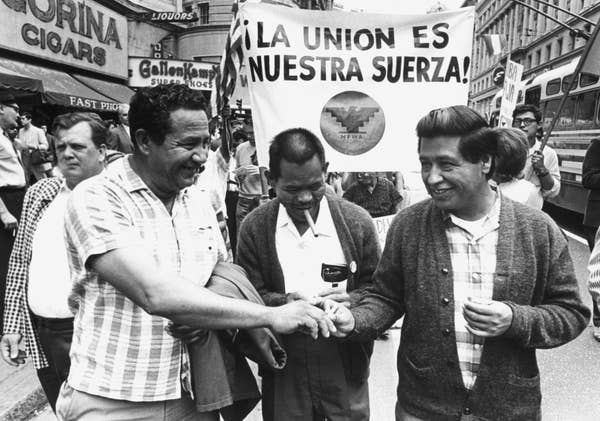
One of them was Larry Itliong, a labor organizer known as “Seven Fingers” because he had lost three fingers in an Alaskan cannery. On September 7, 1965, Itliong led about 1,500 Filipino grape workers off the farms around Delano, California. A week later, he persuaded Cesar Chavez and Mexican American farmworkers to join. Their unions merged in 1966 as the United Farm Workers, with Chavez as director and Itliong as assistant director. Itliong eventually resigned in 1971 and died of ALS in 1977. One of his final projects was Agbayani Village, a retirement home in Delano for aging manongs who had no families to care for them. The last resident, Fred Abad, died in 1997. California did not add Itliong to its recommended K–12 curriculum until 2015–2016.
Sources: National Park Service, Smithsonian Magazine, US Department of Labor
4. Beginning in 1917, the US Radium Corporation hired young women to paint watch dials with radioactive paint and told them to shape the brush with their lips. The company’s own chemists used lead screens and tongs. When the women’s jaws began disintegrating and they tried to sue, the company hired investigators to discredit them — and tried to blame their illness on syphilis.
The US Radium Corporation’s plant in Orange, New Jersey, hired about 70 women — many of them teenagers — to paint glow-in-the-dark dials on watches, instruments, and military equipment using “Undark,” a paint containing radium-226. Workers were trained to “lip, dip, paint,” meaning shape the brush tip between their lips, dip it into the paint, then paint the dial. They earned about 1.5 cents per dial. Some painted their nails, teeth, and faces with the glowing paint for fun because they had been told it was harmless.
The company’s chemists, including the paint’s inventor, Dr. Sabin von Sochocky, used lead screens, tongs, and lab coats. The women were given nothing.
By 1924, at least 50 of the workers had reported severe illness, and 12 had died. Their teeth fell out. Their jaws deteriorated and crumbled, a condition that became known as “radium jaw.” Their bones weakened and broke.
When the women tried to hold the company accountable, US Radium ran a coordinated campaign to discredit them. They hired a Columbia University “specialist” named Frederick Flynn to falsely declare Grace Fryer healthy. In some cases, the company attributed the women’s symptoms to syphilis, a sexually transmitted disease that in the 1920s was not just a medical diagnosis but a social death sentence for a young woman.
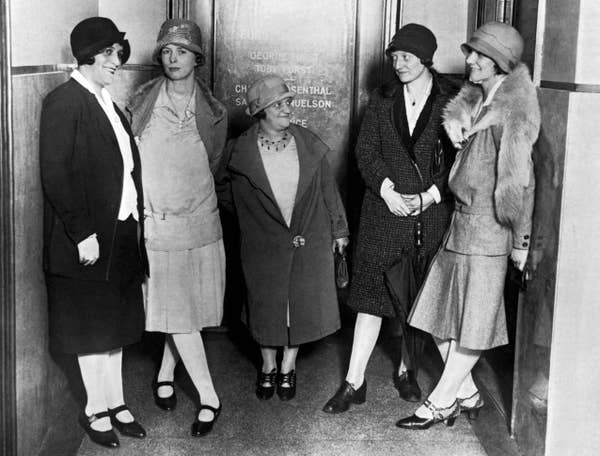
Fryer spent two years trying to find a lawyer willing to take the case. In 1927, attorney Raymond Berry filed suit on behalf of Fryer, Edna Hussman, Katherine Schaub, and sisters Quinta McDonald and Albina Larice. The press called it “The Case of the Five Women Doomed to Die.” By the time the case moved forward, the women were so sick they could barely raise their arms in court.
US Radium settled in 1928. Each woman received $10,000, a $600 annual annuity, and lifetime medical costs. All five were dead within a decade. Their case helped establish the legal right for workers to sue employers for occupational disease and shaped what eventually became OSHA.
Sources: Environmental History, The Archive, Britannica
5. For 40 years, the US Public Health Service told 399 Black men in Alabama they were being treated for “bad blood” while deliberately withholding the cure for syphilis — even though treatment had been available for decades, and white patients were receiving it. At least 28 men died directly. No one was ever prosecuted.
Syphilis was not an untreatable mystery in the 1930s. Since 1910, doctors had been using Salvarsan, an arsenic-based drug that was the most widely prescribed medication in the world and was effective against early-stage syphilis. By the time the Tuskegee study began in 1932, treatment with arsenic compounds was standard medical practice for syphilis patients — including white patients — across the United States. The treatment was expensive and involved repeated injections over more than a year, but it existed, and it worked.
Starting in 1932, the US Public Health Service recruited 399 Black men with latent syphilis and 201 uninfected controls in and around Tuskegee, Alabama, telling them they were being treated for “bad blood.” In reality, the government wanted to study what happened when syphilis went completely untreated in the human body. They offered the men free medical exams, meals, and burial insurance. They never gave them actual treatment.
The Public Health Service didn’t withhold treatment because there was none. They withheld it because the study required observing what happened when the disease ran its full course — something they could only do by making sure the men never got better. Then, in the mid-1940s, penicillin emerged as a faster, cheaper, and more effective cure and became the standard of care for syphilis nationwide. White patients received it. The men in Tuskegee did not. Researchers actively tracked the men to make sure they didn’t receive treatment from other doctors or clinics. One local physician was reprimanded for “ruining one of our volunteers.”
By the end of the study, at least 28 men had died directly of syphilis, roughly 100 of related complications, 40 wives had been infected, and 19 children had been born with congenital syphilis.
Peter Buxtun, a young PHS venereal-disease investigator in San Francisco, raised internal objections starting in 1966. After a blue-ribbon panel voted in 1969 to continue the study, Buxtun leaked documents to the Associated Press. Reporter Jean Heller published the story on July 25, 1972. The study ended within months.
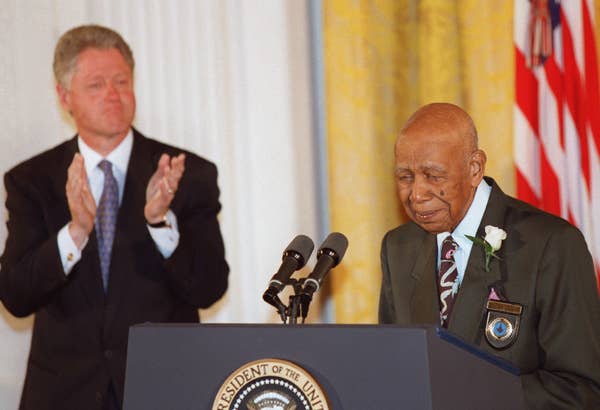
A 1973 class-action suit resulted in a $10 million settlement and free medical care for survivors and their families. President Bill Clinton issued a formal apology in 1997. No one in the Public Health Service was ever criminally prosecuted. The study is widely cited as a foundational cause of medical mistrust in Black communities, including resistance to organ donation and COVID-19 vaccines.
Sources: NPR, PBS, Government Accountability Project, CDC, Smithsonian Magazine
6. Between 1907 and the 2010s, more than 60,000 Americans were forcibly sterilized under state eugenics laws. California’s program directly inspired Nazi Germany’s sterilization law. Forced sterilizations were still happening in California prisons as recently as 2010. The Supreme Court decision that made it all legal has never been overturned.

In the early 20th century, eugenics — the belief that the government could improve the population by preventing “unfit” people from reproducing — was widely embraced by American scientists, politicians, and philanthropists. “Unfit” was defined broadly and conveniently. It included people with disabilities, people with mental illness, people who were poor, people who were promiscuous, people who were immigrants, and, disproportionately, people who were Black, Latino, or Native American. States passed laws authorizing the forced sterilization of people in state institutions — prisons, asylums, homes for the “feeble-minded” — without their consent and often without their knowledge.
Indiana passed the first compulsory sterilization law in 1907. Eventually, more than 30 states followed. The legal framework was cemented in 1927 when the Supreme Court decided Buck v. Bell. Carrie Buck was a 20-year-old white woman in Virginia who had been committed to the Virginia State Colony for Epileptics and Feebleminded after being raped by a relative of her foster family. The state argued that Buck, her mother, and her infant daughter represented “three generations of imbeciles” and that sterilizing Buck served the public interest. Justice Oliver Wendell Holmes Jr. wrote the 8–1 majority opinion upholding Virginia’s sterilization law, declaring: “Three generations of imbeciles are enough.”
Historian Paul Lombardo later showed that Carrie Buck was not intellectually disabled — she had been institutionalized to hide the rape — and her daughter Vivian made the honor roll before dying young of a childhood illness.
An estimated 60,000 to 70,000 Americans were forcibly sterilized under these laws. California alone sterilized roughly 20,000 people, about one-third of the national total. The influence went global. Nazi Germany modeled its 1933 Law for the Prevention of Hereditarily Diseased Offspring on American eugenics policy, specifically on Harry Laughlin’s “Model Eugenic Sterilization Law.” At the Nuremberg Trials, Nazi defendants cited Buck v. Bell in their defense.
Forced sterilization did not end with the early eugenics movement. North Carolina’s program ran until 1977. A 2013 Center for Investigative Reporting investigation found that at least 148 women, disproportionately Black and Latina, were sterilized in California prisons between 2006 and 2010, often without lawful consent.
California began paying reparations of up to $25,000 per survivor in 2022. The Supreme Court has never explicitly overturned Buck v. Bell.
Sources: NPR, Encyclopedia Virginia, CapRadio
7. More than 260,000 Filipino soldiers fought under the American flag in World War II — including through the Bataan Death March — after being promised full veterans’ benefits. After the war, Congress passed a law retroactively declaring their service didn’t count. Of the 66 Allied nations in WWII, Filipino veterans were the only group singled out.
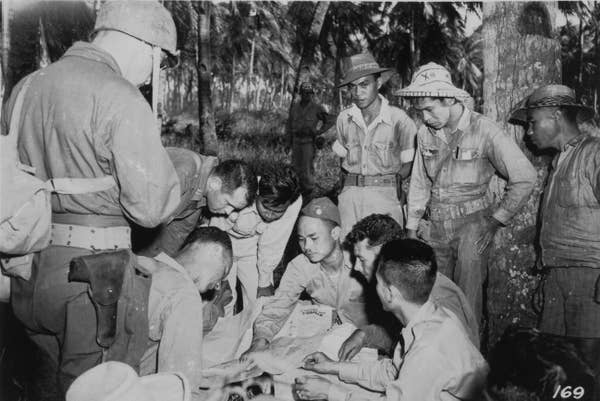
The Philippines was strategically critical to the United States in the Pacific. After Pearl Harbor, the islands served as a forward base against Japan, and their defense and eventual recapture were central to the Pacific war strategy. General Douglas MacArthur famously declared “I shall return” after being ordered to leave the Philippines in 1942, and the brutal campaign to retake the islands from Japanese occupation cost tens of thousands of American and Filipino lives.
On July 26, 1941, President Franklin D. Roosevelt issued a military order incorporating the Philippine Commonwealth Army into the US Armed Forces of the Far East under MacArthur, promising full US veterans’ benefits — the same GI Bill access, pensions, and healthcare that any American soldier would receive. More than 260,000 Filipino soldiers fought under that promise. They endured the Bataan Death March, Japanese prisoner-of-war camps, and years of guerrilla warfare in the jungle.
Then, on February 18, 1946, President Harry Truman signed the Rescission Act. The law retroactively declared that Filipino service “shall not be deemed to have been active military, naval, or air service” for the purposes of US veterans’ benefits, stripping a promised $3 billion in benefits in exchange for a single $200 million payment to the Philippine government. Of 66 Allied nations in WWII, Filipino veterans were the only group singled out this way.
Truman himself wrote in his signing statement that the Filipino veteran “is entitled to benefits bearing a reasonable relation to those received by the American veteran.” They did not get them.
Veterans spent decades organizing for recognition. Naturalization rights came in 1990. Limited VA health care followed in 2003. The 2009 American Recovery and Reinvestment Act established a compensation fund offering a one-time payment of $15,000 for US citizens or $9,000 for Philippine residents. By the time payments began, many veterans had already died. Many claims were denied because Japanese forces had destroyed wartime records. The legal provision that stripped Filipino veterans’ benefits, 38 U.S.C. § 107, remains part of US law.
Sources: NBC News, Obama White House Archives, GovInfo
8. Between 1946 and 1958, the United States detonated 67 nuclear weapons in the Marshall Islands, the equivalent of more than 7,000 Hiroshima bombs. The atolls were not uninhabited. Residents were told the relocation was temporary and “for the good of mankind.” Then the government turned the exposed islanders into research subjects without their consent.
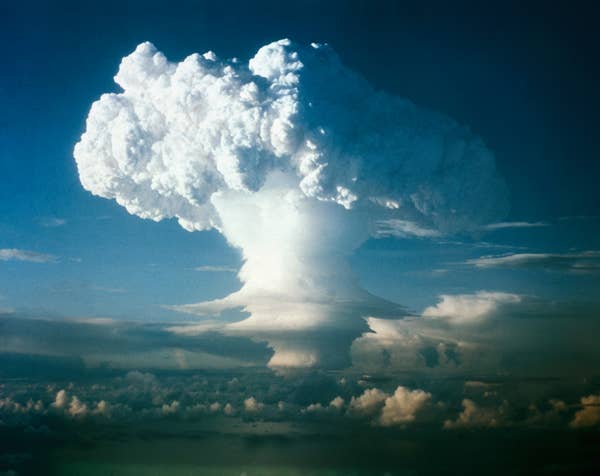
The United States began testing nuclear weapons in the Pacific in 1946, just a year after Hiroshima and Nagasaki. The Marshall Islands — a chain of 29 coral atolls and 5 islands roughly halfway between Hawaii and Australia — were selected because they were remote, under US control as a United Nations Trust Territory, and, in the military’s calculus, expendable.
The atolls were not uninhabited. Bikini had 167 residents. Enewetak had several hundred more. In February 1946, Navy Commodore Ben H. Wyatt assembled the Bikinians after a Sunday church service and asked them to leave their home “for the good of mankind and to end all world wars.” Their leader, King Juda, answered: “We will go, believing that everything is in the hands of God.” They were told the relocation would be temporary. It was not. The Bikinians were moved to Rongerik Atoll, where they nearly starved by 1948; then to Kwajalein; and finally to Kili Island, where their descendants remain today.
Between 1946 and 1958, the US detonated 67 nuclear weapons across both atolls — 23 at Bikini and 44 at Enewetak — with a combined explosive force equivalent to 108.5 megatons of TNT. The tests included underwater detonations, surface blasts, and atmospheric shots. Some vaporized entire islands. Elugelab Island on Enewetak Atoll was completely obliterated by the first hydrogen bomb test, Ivy Mike, in 1952. It no longer exists.
The most devastating test was Castle Bravo on March 1, 1954. It exploded at 15 megatons — about 1,000 times the Hiroshima bomb and more than double what scientists had predicted — sending radioactive fallout east onto inhabited Rongelap, Ailinginae, and Utirik atolls. Children played in the powdery fallout, mistaking it for snow. Rongelap residents received an estimated 175 rads of exposure before being evacuated roughly 48 hours later.
Then came Project 4.1, a classified study that turned the exposed Marshallese into research subjects without their informed consent. At an Atomic Energy Commission advisory meeting in January 1956, Health and Safety Lab director Merril Eisenbud said of returning Rongelap residents to their contaminated home: “While it is true that these people do not live the way Westerners do, civilized people, it is nevertheless also true that these people are more like us than the mice.”
Bikini Atoll remains unsafe for permanent habitation. A 2019 Columbia University study found cesium-137 in Bikini fruit above international safety standards, and background gamma radiation at nearly double the agreed safe limit. Marshallese people can live and work in the US under the Compact of Free Association, but they spent decades fighting for adequate healthcare, compensation, and recognition for what US nuclear testing did to their islands and bodies.
Sources: Arms Control Association, National Security Archive, PNAS, Medicaid.gov
9. From 1956 to 1971, the FBI ran a covert program called COINTELPRO that targeted civil rights leaders, antiwar groups, and Black activist organizations. The program ran over 2,000 operations, sent Martin Luther King Jr. a letter urging him to kill himself, and set up the raid that killed 21-year-old Fred Hampton in his bed.
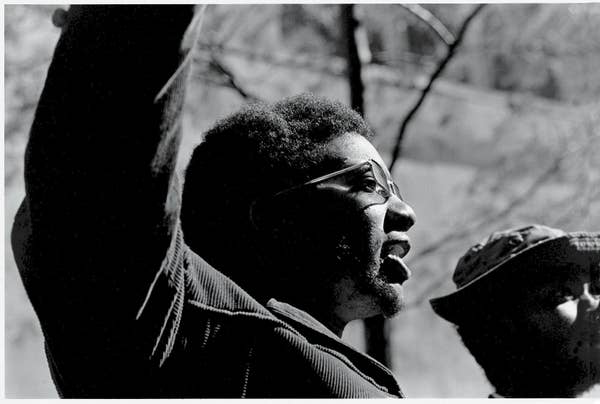
From 1956 to 1971, the FBI operated COINTELPRO — the Counter Intelligence Program — a covert domestic surveillance and disruption operation that targeted civil rights organizations, anti-war groups, the American Indian Movement, socialist organizations, and Black nationalist movements. Under FBI Director J. Edgar Hoover, COINTELPRO’s stated mission was to “expose, disrupt, misdirect, discredit, or otherwise neutralize” groups the bureau considered subversive.
The program ran over 2,000 documented operations. Tactics included wiretapping, infiltrating organizations with informants, sending forged letters to provoke infighting, planting false stories in newspapers, and coordinating with local police to harass, arrest, or physically attack targets. In November 1964, the FBI mailed Martin Luther King Jr. an anonymous package containing surveillance recordings and a letter widely interpreted as urging him to complete suicide. The letter was timed to arrive before King traveled to accept the Nobel Peace Prize.
The most notorious COINTELPRO operation targeted Fred Hampton, the 21-year-old deputy chairman of the Illinois Black Panther Party in Chicago. Hampton was building what he called a “Rainbow Coalition,” an alliance between the Black Panthers, the Puerto Rican Young Lords, and the Young Patriots, a group of poor white Appalachian migrants. The coalition organized free breakfast programs, medical clinics, and political education across racial lines. The FBI classified Hampton as a “key militant leader” and assigned an informant, William O’Neal, to infiltrate his inner circle. O’Neal — recruited by Special Agent Roy Martin Mitchell after a car-theft arrest in 1968 — became Hampton’s head of security and provided the FBI with a detailed hand-drawn floor plan of his apartment at 2337 West Monroe Street.
On the night of December 3, 1969, O’Neal slipped the barbiturate secobarbital into Hampton’s drink. At approximately 4:45 a.m. on December 4, fourteen Chicago police officers attached to Cook County State’s Attorney Edward Hanrahan raided the apartment. According to the federal grand jury report, police fired between 90 and 99 shots. The Panthers fired one, a single reflexive discharge from Mark Clark’s shotgun as he was fatally shot. Hampton was unconscious in bed beside his pregnant fiancée, Akua Njeri, when he was shot twice in the head at close range. An officer reportedly said, “He’s good and dead now.” The FBI later approved a $300 bonus for O’Neal’s handler.
In 1982, the federal government and the City of Chicago paid $1.85 million to the victims’ families. No senior FBI official was ever prosecuted. COINTELPRO was only exposed in 1971 after activists broke into an FBI field office in Media, Pennsylvania, and stole internal files.
Sources: History, National Archives, Harvard Political Review
10. After Pearl Harbor, the US Navy seized a sacred Hawaiian island and used it as a bombing range for nearly 50 years. In 1977, a 26-year-old Native Hawaiian activist named George Helm disappeared at sea trying to stop it. His body was never found. When the island was finally returned, a quarter of it was still contaminated with unexploded ordnance.
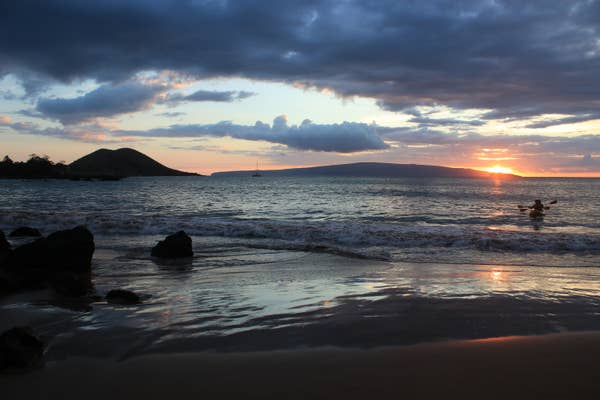
In 1941, Hawaiʻi was a US territory, not a state. Native Hawaiians had already seen their sovereign kingdom overthrown by American-backed businessmen in 1893 and their land annexed by the United States in 1898. When the Japanese attacked Pearl Harbor on December 7, 1941, the US military declared martial law across the territory, suspended civil liberties, and seized land for military use, including the 28,800-acre island of Kahoʻolawe, the smallest of Hawaiʻi’s eight main islands.
To Native Hawaiians, Kahoʻolawe is not empty land. It is considered a kinolau — a physical embodiment — of Kanaloa, the ocean god. The island contains hundreds of archaeological sites and cultural artifacts dating back centuries. Ancient Hawaiians used it for religious ceremonies, navigation training, and agricultural cultivation.
The Navy turned it into a live-fire bombing range. For nearly 50 years, the military dropped ordnance ranging from 20mm rounds to 16-inch battleship shells. In 1965, the Navy detonated three 500-ton TNT charges in a test called “Operation Sailor Hat” to simulate the effects of a nuclear blast on naval vessels. The explosions were so powerful that they permanently altered the island’s coastline.
In 1976, Native Hawaiian activists formed the Protect Kahoʻolawe ʻOhana (PKO) and began making illegal landings on the island to stop the bombing and assert Native Hawaiian rights to the land. Among the leaders was George Jarrett Helm Jr., a 26-year-old falsetto singer, surfer, and activist from Molokaʻi who became one of the most compelling voices of the Native Hawaiian sovereignty movement. Helm testified before Congress and state officials, arguing that the bombing of Kahoʻolawe was inseparable from the broader history of Hawaiian land dispossession.
On March 5, 1977, Helm, Kimo Mitchell, and Billy Mitchell traveled to Kahoʻolawe to help extract two activists who had been hiding on the island for 35 days. Their pickup boat never arrived. On March 7, Helm and Kimo Mitchell attempted to paddle back to Maui on surfboards in rough seas. Billy Mitchell turned back. Helm and Kimo Mitchell were never seen again. Their bodies were never recovered.
President George H. W. Bush ordered the bombing to stop in 1990. The island was returned to Hawaiʻi in 1994, and Congress authorized $400 million for cleanup. When the contracted work ended in 2003, only 74% of the surface had been cleared, and just 9% to a depth of four feet. About a quarter of the island remains contaminated with unexploded ordnance.
Sources: Hawaii Magazine, Sacred Land, Hawaii News Now
11. On June 19, 1982, Vincent Chin — a 27-year-old Chinese American man celebrating his bachelor party — was beaten to death with a baseball bat by two white autoworkers who blamed Japanese imports for Detroit’s economic collapse. Chin was not Japanese. His killers received three years’ probation and a $3,000 fine. Neither served a day in prison.
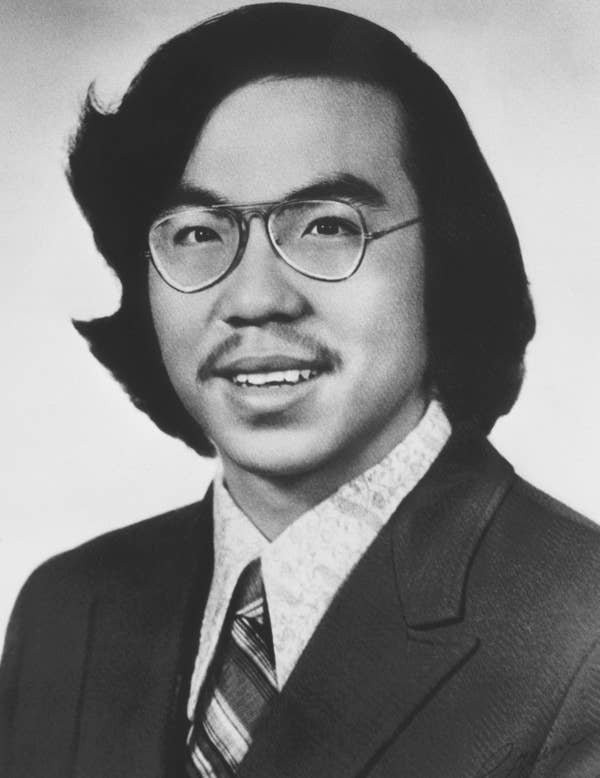
At the time, Detroit was in an economic depression driven by the collapse of the American auto industry, and Japanese imports were widely blamed. Anti-Japanese sentiment in the city was intense. Bumper stickers reading “Toyota — Datsun — Honda = Pearl Harbor” were common, and a congressman had publicly smashed a Japanese car with a sledgehammer.
On June 19, 1982, Vincent Chin was at his bachelor party at the Fancy Pants strip club in Highland Park, Michigan. He was getting married the following week. At the club, he encountered Ronald Ebens, a 42-year-old Chrysler plant superintendent, and Ebens’s stepson, Michael Nitz, who had recently been laid off. Witnesses said Ebens shouted at Chin, “It’s because of you little motherfuckers that we’re out of work.” A fight broke out, and everyone was kicked out of the bar.
What happened next was not a bar fight. Ebens and Nitz searched the neighborhood for Chin for 20 to 30 minutes. They paid a man named Jimmy Choi $20 to help them find him. They eventually caught Chin outside a McDonald’s on Woodward Avenue. Nitz held Chin from behind while Ebens swung a Jackie Robinson–model baseball bat at his head. An off-duty police officer who witnessed the beating said Ebens swung “like he was swinging for a home run.” Chin’s skull was fractured. He fell into a coma and died four days later, on June 23, the week he was supposed to get married.
Wayne County Circuit Judge Charles Kaufman accepted manslaughter pleas and sentenced Ebens and Nitz to three years’ probation and a $3,000 fine each. No jail time. Kaufman said, “These weren’t the kind of men you send to jail. … You don’t make the punishment fit the crime; you make the punishment fit the criminal.”
The case became a turning point in Asian American civil rights organizing. The newly formed American Citizens for Justice pushed the US Department of Justice into the first federal civil-rights prosecution involving an Asian American victim. Ebens was convicted in 1984 and sentenced to 25 years, but the conviction was reversed on appeal, and a 1987 retrial in Cincinnati acquitted him. Neither man served a day in prison. A civil judgment of $1.5 million against Ebens has gone almost entirely unpaid.
Sources: CNN, American Citizens for Justice
12. On May 13, 1985, Philadelphia police dropped a bomb from a helicopter onto a rowhouse in a Black neighborhood, killing 11 people — including five children — and destroying 61 homes. Fire officials were ordered to “let the fire burn.” Decades later, children’s remains were found being used in a university forensics course without the families’ knowledge.
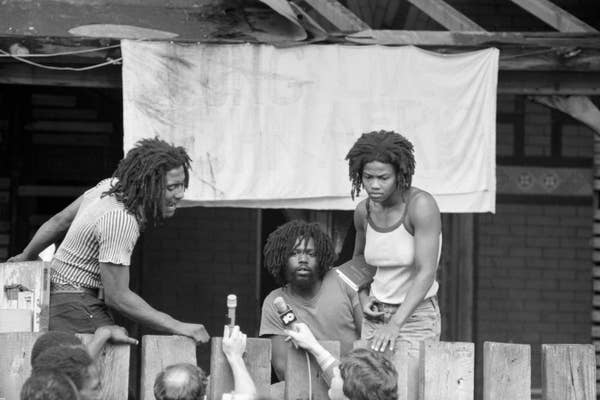
MOVE was founded in 1972 by John Africa (born Vincent Leaphart), a Korean War veteran in West Philadelphia. The group combined Black liberation politics with an anti-technology, back-to-nature philosophy. Members rejected modern medicine, schooling, and processed food, and advocated for animal rights and environmental justice. All members took the surname “Africa.”
Tensions with the city began in the 1970s. MOVE members lived communally, kept animals, built outdoor structures, and broadcast political messages through a bullhorn at all hours. Neighbors — many of them middle-class Black homeowners — repeatedly complained about sanitation, noise, and verbal confrontations. In 1978, a standoff at MOVE’s Powelton Village headquarters ended in a shootout that killed police officer James Ramp. Nine MOVE members were convicted of third-degree murder and sentenced to 30 to 100 years each. MOVE members maintained that Ramp was killed by crossfire from other officers.
In 1981, MOVE relocated to a rowhouse at 6221 Osage Avenue in the Cobbs Creek neighborhood. Members fortified the house, built a rooftop bunker, and resumed broadcasting demands for the release of the imprisoned MOVE Nine through loudspeakers day and night. Neighbors again complained — this time to Mayor W. Wilson Goode, the city’s first Black mayor — about the noise, the fortification, the children who weren’t enrolled in school, and growing concerns about weapons. In May 1985, the city obtained arrest warrants for four MOVE members on charges including illegal possession of firearms and making terroristic threats.
On May 13, 1985, roughly 500 police officers moved to execute the warrants. After an hours-long standoff in which police fired more than 10,000 rounds, a Pennsylvania State Police helicopter dropped two improvised explosives — a satchel of FBI-supplied C-4 and Tovex water gel — onto the roof at 5:27 p.m. Police Commissioner Gregore J. Sambor and Fire Commissioner William Richmond ordered firefighters to “let the fire burn.”
The fire consumed 61 surrounding rowhomes across two city blocks and left 250 people without homes. Eleven MOVE members were killed, including five children.
A 1986 special investigation commission called the bombing “unconscionable,” but no city official was ever criminally charged. In 2021, the Penn Museum and the University of Pennsylvania admitted that physical anthropologist Janet Monge had retained children’s bone fragments and used them in an online forensics course without the families’ consent. In 2024, additional remains believed to belong to 12-year-old Delisha Africa were “rediscovered” at the museum. Then-City Health Commissioner Thomas Farley resigned in 2021 after revealing he had ordered other MOVE remains cremated without family notification.
Sources: PBS, NBC Philadelphia, Britannica
13. During the 1992 LA uprising, more than 2,200 Korean American businesses were destroyed — roughly half of all property damage citywide — after the LAPD drew defensive perimeter lines around wealthier white neighborhoods and left Koreatown without police protection. Korean Americans call it Sa-I-Gu.

The area that became Koreatown had once been a wealthy, predominantly white neighborhood in central Los Angeles — home to the Ambassador Hotel, where Robert Kennedy was assassinated in 1968. Through the 1950s and 1960s, as Black families moved into surrounding South Los Angeles neighborhoods, white residents left in what historians describe as classic white flight. Property values dropped. By the late 1960s and 1970s, the mid-Wilshire area was in decline, and Korean immigrants, arriving in growing numbers after the 1965 Hart-Celler Act opened US immigration from Asia, found affordable commercial and residential real estate. A businessman named Hi Duk Lee bought five blocks near Olympic and Normandie in 1971, opened a Korean grocery store, and began building what would become Koreatown. By the 1980s, the neighborhood was a thriving hub of Korean-owned businesses, but it sat geographically between wealthier white neighborhoods to the west and predominantly Black and Latino neighborhoods to the south.
Korean merchants also operated many of the small businesses — liquor stores, grocery stores, beauty supply shops — in South Central LA’s Black neighborhoods. Tensions ran high. Black residents felt Korean business owners were economically extracting from their community without investing in it. Korean business owners felt targeted by crime and disrespected by customers. Language barriers and cultural misunderstandings deepened the divide. These tensions exploded publicly on March 16, 1991, when Korean shopkeeper Soon Ja Du shot and killed 15-year-old Latasha Harlins at the Empire Liquor Market in South Central after a dispute over a $1.79 bottle of orange juice. Security camera footage showed Du grabbing Harlins by the sweater, Harlins punching Du, then turning to leave, at which point Du shot her in the back of the head from three feet away. Du was convicted of voluntary manslaughter. Judge Joyce Karlin sentenced her to five years’ probation, 400 hours of community service, and a $500 fine. No prison time. The sentencing — which came just two weeks after the Rodney King beating was captured on video — was devastating to the Black community in South Central and set the stage for what would happen 13 months later.
On April 29, 1992, a Simi Valley jury acquitted four LAPD officers in the videotaped beating of Black motorist Rodney King. The unrest that followed killed 63 people, injured more than 2,300, led to over 12,000 arrests, and caused more than $1 billion in property damage.
More than 2,280 Korean American businesses were looted, damaged, or destroyed, with roughly $400 million in losses, about half of all property damage citywide, even though Korean Americans were a small fraction of LA’s population.
LAPD Chief Daryl Gates was at a Brentwood political fundraiser when the violence began. Police strategy deployed a defensive perimeter that protected wealthier, whiter areas, including Beverly Hills, West Hollywood, and West LA, while leaving Koreatown effectively without protection. Korean merchants armed themselves and defended their stores from rooftops, images broadcast worldwide, often without context.
Sources: NBC News, NPR, MacArthur Foundation, LAist, NBC News
By BuzzFeed