
Calling on the Federal Government to Address the Long-Term Backlog in Immigration Security Screening
By Shen Guanyuan
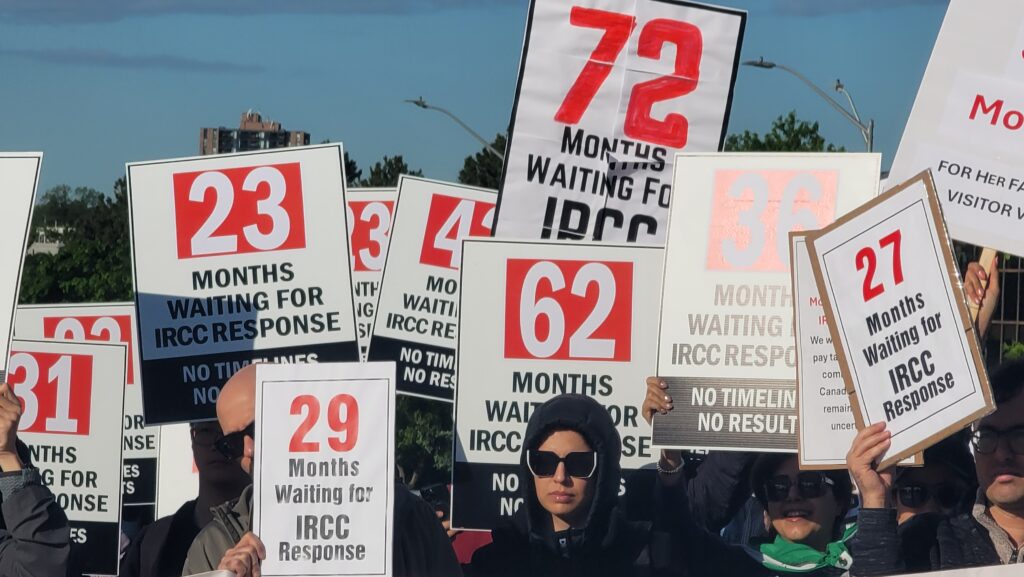
[Mississauga, Toronto] On May 28, 2026, a protest targeting the long-term backlog issue in Canada’s immigration Security Screening was held in Mississauga, Ontario. Immigration applicants, family members, and supporters from different ethnic communities across Canadian provinces gathered outside the venue of the National Citizenship and Immigration Conference (NCIC 2026) and at locations associated with Immigration, Refugees and Citizenship Canada (IRCC), calling on the federal government to increase transparency in immigration screening procedures and resolve the large-scale application backlog caused by prolonged security screening.
The event was held near the Hilton Hotel in Mississauga because the National Citizenship and Immigration Conference (NCIC 2026) was taking place there. The three-day conference attracted a large number of immigration consultants from across the country, as well as officials from Immigration, Refugees and Citizenship Canada (IRCC) and the Canada Border Services Agency (CBSA). Protesters hoped to use this opportunity to directly express the circumstances and demands of applicants affected by prolonged security screening to relevant policymakers and industry professionals.
At the protest site, demonstrators gathered peacefully near the hotel entrance. Through banners, signs, and public statements, they highlighted the reality that many applicants have fallen into hardship due to prolonged delays in security screening. Many applicants stated that they have lived and worked in Canada for many years, yet their permanent residence applications have remained in “security screening in progress” status for extended periods, with waiting times far exceeding officially published standards. In some cases, the delays have lasted for several years.
The protest organizers stated that the action was not intended to oppose national security screening itself, but rather to call for a screening system that is “transparent, timely, and accountable.” According to briefing materials distributed at the event, the issue has already entered federal public discussion through multiple channels, including several research reports submitted to the Standing Committee on Citizenship and Immigration (CIMM) of the Parliament of Canada, as well as two federal electronic petitions.
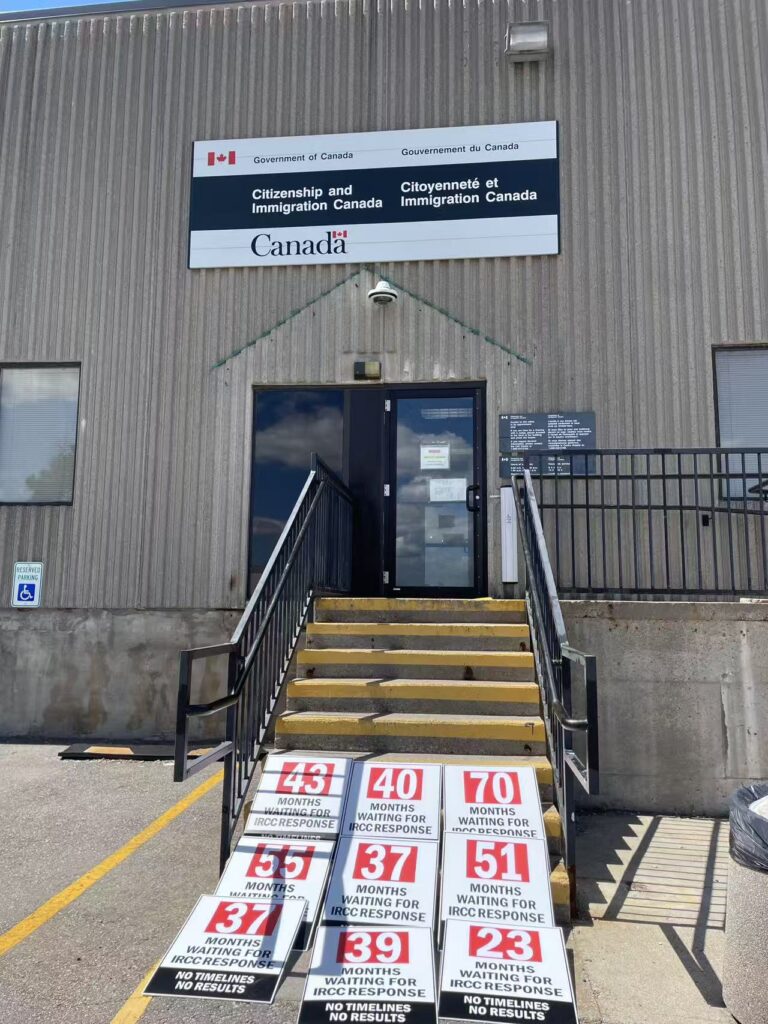
The organizers pointed out that the two parliamentary e-petitions, e-7259 and e-7341, have together received more than 18,000 signatures of support. In addition, multiple public events have been held across the country, including a gathering on Parliament Hill in Ottawa on March 13 of this year, and protest activities held on May 1 in downtown Vancouver and outside IRCC offices.
The organizers disclosed that prior to this action, they had proactively contacted a number of immigration consultants. Many industry professionals expressed sympathy and understanding for the situation faced by applicants. Some consultants explicitly supported the action and stated that during the NCIC conference they would raise with attendees and relevant officials the impact that prolonged security screening has had on applicants, families, and Canada’s attractiveness to talent.
In addition to members of the Chinese community, the event also received participation and support from individuals in different ethnic communities, including Iranian and Russian communities. Participants at the scene stated that prolonged security screening is no longer an issue affecting only a single community, but rather a broader issue involving the transparency, fairness, and administrative efficiency of Canada’s immigration system.
Later that day, some protesters proceeded to IRCC offices in the Greater Toronto Area to continue peaceful demonstrations and submitted a collective open letter and related materials to the relevant authorities. The open letter stated that prolonged security screening has had profound impacts on a large number of families, including long-term separation, career stagnation, psychological pressure, and declining trust in Canada’s immigration system.
According to research reports submitted to CIMM, the average backlog clearance time for CBSA permanent resident security screening increased from 13.5 months in 2024 to 64.8 months in 2025; more than 80% of cases have exceeded the official 110-day service standard. The report argues that the current issue is no longer limited to isolated cases, but has developed into a pattern of systemic backlog and administrative imbalance.
The protest organizers stated that they hope the federal government will establish clearer time standards, increase transparency regarding application progress, and create an independent review and oversight mechanism for long-term backlog cases, in order to restore public confidence in Canada’s immigration system.