
By Xintian Wang
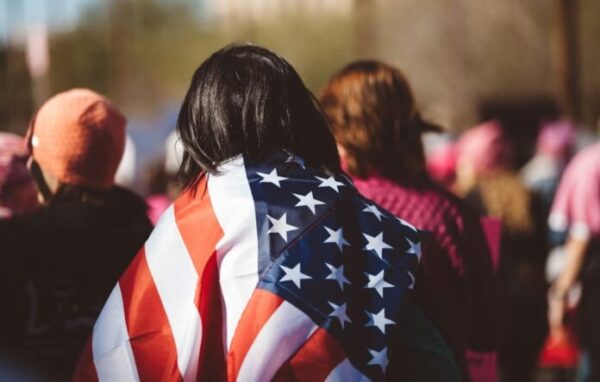
What does it take to be seen as “truly American”?
For many, the answer still begins with birthplace. But for Asian Americans and Pacific Islanders, it suggests a far more complicated reality: citizenship alone does not guarantee belonging; visibility does not always bring understanding; and public perceptions continue to shape how AAPI communities move through daily life.
On May 1, the Asian American Foundation (TAAF) and NORC at the University of Chicago released the findings of the sixth annual Social Tracking of Asian Americans in the U.S. Index, known as the STAATUS Index. The study examines how Americans view AAPI communities and how AAPIs understand their own place in the country.
This year’s report arrives as the United States approaches its 250th anniversary, at a moment when debates over immigration, birthright citizenship, geopolitical tensions, and race continue to shape national politics. The findings show a persistent gap between how AAPIs experience American life and how the broader public perceives them.
“This year’s STAATUS Index provides our clearest look yet at the disconnect between how the nation’s 25 million AAPIs experience life and how the rest of the country perceives us,” said Norman Chen, Chief Executive Officer at TAAF.
The survey found that 50% of U.S. adults believe being born in the United States is important to being “truly American.” By contrast, 77% of AAPIs said being born in the U.S. is not important to that definition, more than any other racial group surveyed. AAPIs were also among the least likely to tie American identity to being White or Christian, with 93% saying being White is not important and 84% saying being Christian is not important.
For Sruthi Chandrasekaran, director of data and research at TAAF, that divide is one of the report’s most revealing findings. “For Asian Americans who have long navigated being seen as foreign regardless of where they were born, this data shows that much of the public ties feelings of belonging to more than just citizenship alone,” she said.
Belonging means community, not just citizenship
The 2026 STAATUS Index found that AAPIs most often define belonging through community connection, inclusion, and having a voice. 47% of AAPIs said belonging means feeling a strong, meaningful connection to their community. The same share said it means not feeling excluded because of race, religion, or background. 45% said it means being able to contribute to shared decisions and have their voice count.
Still, the report found that many AAPIs only partly feel they belong in the U.S. Three-quarters of AAPIs said they feel belonging overall, compared with 83% of White Americans. The gap reflects a familiar tension: AAPIs may build families, careers, and communities in the U.S., but still face questions about where they “really” come from.
Professor Yung Yi Diana Pan, director of the American Studies Program and associate professor of sociology at the City University of New York, Brooklyn College, said the report reveals what AAPIs already know and continue to contend with.
“AAPIs are racialized as outsiders, and strive to belong, yet are deemed ‘unfamiliar’ regardless of their efforts,” Pan said. “This constant need to negotiate belonging stems from the ‘forever foreigner’ image in that regardless of how much one may adapt to U.S. society, whether it’s language, academics, sports, the arts, etc., these efforts are never enough to truly feel a sense of belonging.”
Pan said education remains a crucial part of changing those perceptions.
“Much of this marginalization stems from a lack of education about AAPI history,” Pan said. “If children learn about the generations of AAPIs in the U.S. and the various contributions, perhaps they will see AAPIs as American. And in turn, this could affect the way that older generations perceive AAPIs, too.”

Seen as successful, but still unsafe
The report also shows how AAPIs continue to live inside a contradiction. The American public tends to place Asian Americans near the upper end of the U.S. social ladder, with an average rating of 7 out of 10, in which 82% of U.S. adults placed Asian Americans in the top half of the ladder.
But that perception of success does not match the full lived reality. The report found that ‘worry’ is more top of mind for AAPIs than for other groups. While ‘hope’ was the most common emotion among White, Black, and Hispanic Americans, AAPIs most often chose ‘worry,’ at 44%, followed by ‘hope’ at 40% and ‘frustration’ at 31%.
Qin Gao, acting director of the Asian American Initiative and professor in social policy at Columbia University, said that the finding speaks to the emotional cost of living with insecurity.
“It takes a heavy toll on people to live in constant worry,” Gao said. “It is an important finding to remind us that it takes a lot more dialogue and action to ignite hope for the AAPI community and to alleviate their worries.”
The report also found that more than one in five AAPIs said they had been insulted or called a bad name because of their race or ethnicity in the past 12 months. One in five said they had been harassed or threatened. Five percent said they had been physically attacked or assaulted. AAPIs were also more likely than any other group to report feeling unsafe on public transportation and in online spaces because of their race or ethnicity.
For Gao, the data also points to how stereotypes continue to limit perceptions of Asian American leadership. The report found that Asian Americans are more often associated with being respectful, competent, and reliable in the workplace, while White Americans are more often associated with being assertive and charismatic.
“This reflects the persistent stereotype that portrays Asian Americans as hard workers, while in reality many Asian Americans have risen to be top leaders in many fields in our society and globally, such as business, tech, education, the arts — you name it,” Gao said. “I think it’s important for Asian Americans to loudly, proudly, and assertively state their leadership roles, standpoints, and visions.”
A community misplaced in America’s racial landscape
Another major theme of the report is how Asian Americans get positioned within conversations about race. According to the STAATUS Index, the American public is more likely to see Asian Americans as closer in status to White people than to people of color. That view is largely driven by White Americans. By contrast, 74% of AAPIs see the status of their own racial group as more similar to people of color than to White people.
“One interesting finding is that White Americans tend to see AAPIs as closer to whiteness, while people of color are less likely to do so,” Pan said. “This again shows a lack of awareness, especially among White communities, about both historical and contemporary racism and discrimination.”
Kavitha Rajagopalan, director of research and analysis at the Center for Community Media at the Craig Newmark Graduate School of Journalism at City University of New York, said the report shows how public perception can flatten the diversity and vulnerability of AAPI communities, especially around immigration.
“Most significantly, the report reveals how heavily AAPIs have been impacted by recent immigration policy changes,” Rajagopalan said. “While we have seen a rise in news coverage of the impact of immigration enforcement on Latine and select Black immigrant communities, few stories of immigration policy and enforcement impact on AAPI communities have escaped from within AAPI community media into mainstream news.”
The report found that AAPIs were more likely than the general public to see recent federal policies as having negative effects on Asian Americans. 63% of AAPIs said detentions and deportations had a negative impact. 67% said higher fees or tighter rules for skilled worker visas had a negative impact. 66% said new limits or fees on student visas had a negative impact. 71% said tariffs on goods imported from countries like China or India had a negative impact.
Rajagopalan said this lack of mainstream coverage can reinforce the false idea that AAPIs face fewer barriers than other communities of color.
“This likely contributes to widespread perceptions that AAPI are more economically secure and of a higher status than other communities of color, and therefore less vulnerable than other impacted communities,” Rajagopalan said.

Suspicion toward Chinese Americans remains
The report also found that 21% of U.S. adults are concerned that Chinese Americans pose a threat to U.S. society. Nearly one in four U.S. adults believe that Asian Americans are more loyal to their country of origin than to the U.S., while another 50% expressed ambivalence.
Chandrasekaran said that the finding should be read in the context of both history and current events.
“Our study shows while most of the general public isn’t concerned that Chinese Americans pose a threat to U.S. society, a significant portion is – with national security and the job market representing top concerns,” Chandrasekaran said. “We also know the nation has demonstrated historic animosity towards Chinese immigrants, most notably seen with the Chinese Exclusion Act.”
She added that the report also found public opinion can shift depending on how issues are framed. When respondents saw different arguments about revoking some Chinese student visas in critical fields, support changed across right-leaning, balanced, and left-leaning framings.
“But the STAATUS Index also shows U.S. adults are persuadable on issues impacting Chinese Americans, and that public opinion is more nuanced and flexible than headlines suggest,” Chandrasekaran said.
Visible in culture, invisible in history
The report’s final section focuses on what it calls a paradox of visibility. AAPIs continue to shape U.S. culture, but much of the public still knows little about AAPI history, influence, or daily experiences.
More than a quarter of U.S. adults said they have none of the seven common types of relationships with an Asian American, including family member, friend, coworker, neighbor, doctor, or teacher. Instead, the public gets most of its information about AAPIs from social media, TV, movies, music, and news outlets. Nearly one in three said they do not get information about AAPIs at all.
The knowledge gap extends to history. 53% of U.S. adults could not name a significant event or policy from Asian American history in the U.S. Among those who could, the most common answer was Japanese American incarceration during World War II.
Rajagopalan said she was struck by how little many Americans could name, even after recent gains in representation. “I was also surprised that most U.S. adults couldn’t think of an AAPI celebrity or public figure, given how much more representation AAPIs have had in film and politics in recent years,” Rajagopalan said.
Still, the report also found signs of change. Younger people were more likely to recognize rising AAPI influence, and the American public expressed support for teaching AAPI history, culture, and contributions in schools. When asked what public school students should learn about AAPIs, respondents most often chose the history of Asian immigration and immigrant communities, cultural traditions and practices, and the contributions of AAPI heroes and leaders.
Gao said she found that generational shift encouraging.
“One finding that stood out for me is that younger people are more likely to recognize AAPI influence,” Gao said. “Youth represents the future and guides the way for society. I am very encouraged by this, which speaks to the amplified AAPI voices and growing AAPI influence in our society.”
As the country approaches its 250th anniversary, the report leaves a more urgent challenge: to build a future where belonging is not something AAPI communities must keep proving, but something the nation finally learns to see, protect, and honor.