
By Rachel Lau

Asian faces have been part of the Canadian landscape for hundreds of years, dating back to the late 1780s, according to the Government of Canada.
Since then, the community has boasted a long, prosperous history in the country, albeit one mired by attitudes and laws of racism and prejudice.
The first 50
Dr. Laura Madokoro, an associate professor of migration, humanitarianism, settler colonialism and active history at Carleton University, notes that the Chinese community is “probably one of the longest and most established Asian-Canadian communities.”
She confirms that Asian migration to this side of the Pacific Ocean predates the Canadian Confederation of 1867.
“Canada’s history of Asian migration and settlement is bound up with these larger histories of mobility and settlement along the Pacific,” she tells CTV News. “Canada’s one part of a much longer, much larger history of mobility that’s centred in Asia.”
The federal government states that the first Chinese migrants to land in Canada — 50 artisans tasked with building a trading post — arrived with British fur trader Captain John Meares at Nootka Sound on Vancouver Island in May 1788.
“The following year, an additional 70 Chinese workers arrived to help build a fort and a schooner,” the government notes.
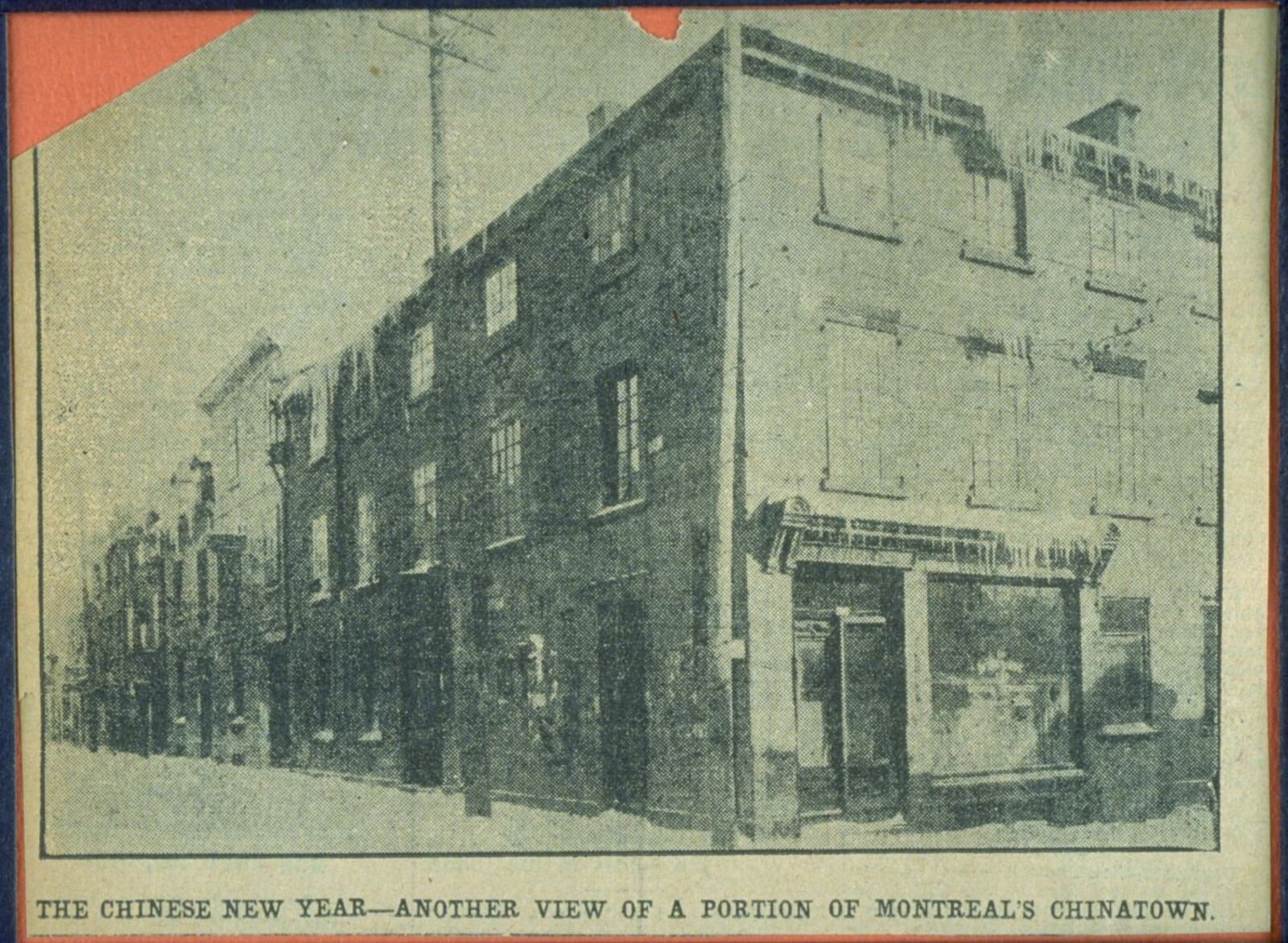
In the decades that followed, Dr. Winston Chan, a prominent advocate of Montreal’s Chinese community, explains that China entered the throes of the Taiping Rebellion, a civil war between the Qing Dynasty, the last imperial dynasty, and the Taiping Heavenly Kingdom, which sought to overthrow it, from 1850 to 1864.
“There was a lot of debt, there was a lot of violence, there was famine, there was a lot of poverty,” said Chan. “Almost everybody that came from China to Canada to build the railroads is from the same hometown that my ancestors are from, which is Taishan (台山).”
Despite the harsh living conditions and poor pay during the railroad construction, many ended up staying long-term, giving rise to the still-standing neighbourhoods known as Chinatown.
“They were paid very, very little at that time,” said Chan. “There was a saying that for every mile, there was one Chinese death because it was so dangerous, didn’t pay well, and they weren’t treated as citizens.”
Why move?
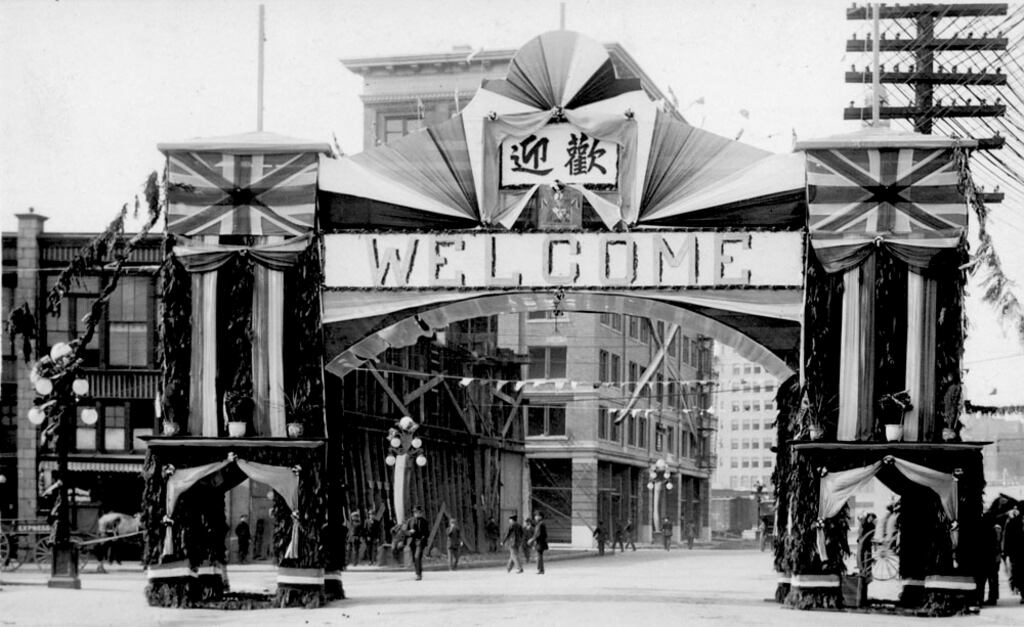
Madokoro notes that the many reasons people choose to move so far away from home have not changed much in the last few hundred years.
“Political instability, economic insecurity, those have always been causes for mobility and migration,” she said.
She gives the example of her own Japanese roots, from the Wakayama region.
“They were fishermen in Japan, and they could translate that work to the Canadian context,” she said. “When economic conditions weren’t great in the homeland, that gave the opportunity or prompted people to think about, well, maybe we’ll try our fortunes elsewhere.”
Chan adds that the wars in Vietnam and Cambodia also brought many people to Canada’s shores.
“There were people from these South-East Asian countries that arrived, that also brought a new type of contribution to Quebec and Canada,” he said.
“Around the 1990s, there was another wave of immigration from Hong Kong, which is called the investment immigrants. So, they came into another wave, and that wave helped build, in some ways, Brossard, (on the) South Shore of Montreal.”
Racist restrictions
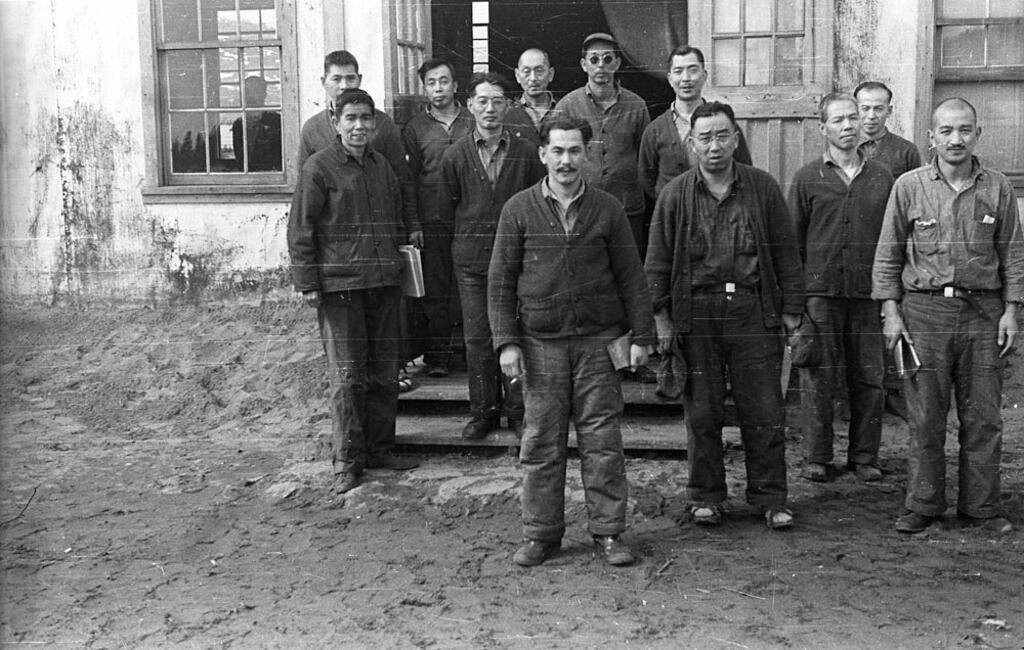
Immigration to Canada from Asia didn’t come without discrimination, on the street or in the law.
Madokoro lists: the head tax for Chinese migrants; the Gentlemen’s Agreement for the Japanese, which restricted immigration to 400 men and domestic servants per year; the Chinese Immigration Act, also known as the Chinese Exclusion Act, prohibiting Chinese immigrants from entering the country for 24 years; and the continuous journey regulations for South Asians.
“There’s a lot of pushback when the numbers start to seem too large with the end of the railway. So, there are concerns about South Asian settlement, Japanese settlement and Chinese settlements,” Madokoro said. “You start to have in the late 19th, early 20th Century, these moves to restrictions.”
Chan explains that the Chinese head tax, starting at $50 a person, was “the equivalent of two mortgages at that time.”
Madokoro adds that, “The idea was that it was going to be punitive enough that no Chinese migrant would ever come again to Canadian shores.”
She points out that, though we broadly celebrate multiculturalism now, there’s much left to be discovered about the people who left their homelands in search of greener pastures.
“People lived multiple lives,” she said. “There’s a reality of how people were communicating in their own languages, maintaining cultures, practices (and) religions. But not all of that was necessarily seen by Canadian society… People didn’t just move here and forget everything (from) home.”
Here is a timeline of significant moments in Asian immigration to Canada:
May 1788
60 Chinese artisans arrive at Nootka Sound on Vancouver Island with British fur trader Captain John Meares to help build a trading post.
1789
An additional 70 Chinese workers arrive to help build a fort and a schooner.
1859
Chinese immigrants from San Francisco begin arriving in the Fraser River Valley. Berkerville, B.C. is recignized as the first Chinese community in Canada.
1877
Manzo Nagono, the first recorded Japanese person to arrive in Canada lands in Victoria, B.C. This first wave of immigration takes place until 1928. By the 1930s, 23,000 Japanese people had resettled in Canada.
1881 to 1884
More than 17,000 Chinese immigrants arrive in Canada from southern China and the coastal United States to build and maintain the Canadian Pacific Reailway. Racism against Chinese Community is widespread, even as the project is completed. The death count of workers from dynamite incidents, landslides, rockslides, caveins, scurvy and other illnesses is estimated between 600 and 2,200.
1885
The Chinese Immigration Act comes into effect, imposing a $50 head tax on every Chinese person seeking entry into Canada.
Immigrants of Chinese origin are alse barred from voting in federal elections under the Electoral Franchise Act. It marks a time of anti-Chinese racism in the country.
1890s
The first Koreans arrive in Canada on a temporary basis to train as missionaries.
1897
Immigration from South Asia to Canada begins, drawign racial hostility and resentment.
1898
New legislation permits Canadians of some Asian origins to vote.
1900
The Chinese head tax is raised to $100.
1903
The Chinese head tax is raised to $500.
1908
Canada’s Immigration Act is amended to include the federal government’s “continuous journey regulation,” which prohibits the landing of immigrants who did not come to Canada by continuous journey from their native land.
May 23, 1914
The Komagata Maru incident occurs: An immigration dispute involving passengers aboard a Japanese steamship denied entry in Vancouver, B.C. The Komagate Maru sailed from Hong Kong through Shanghai in China and the Japaese ports of Moji and Yokohama. Its psassengers mostly consisted of Sikhs and British subjects.
1918
The Montreal Chinese Hospital is established to meet the medical needs of the Chinese community during the influenza epidemic.
1920
The Dominion Elections Act takes federal voting rights away from people already denied provincial voting rights because of race, including those of Chinese, Japanese and South Asian origins.
July 1, 1923
Parliament passes the Chinese Immigration Act, also known as the Chinese Exclusion Act, preventing many families from reuniting in Canada. Fewer than 50 Chinese immigrants are allowed into Canada at this time.
1931
Immigrants from the Philippines begin to arrive in Canada, settling mostly in Toronto, Vancouver, Winnipeg, Montreal, Calgary and Edmonton.
1942
People of Japanese origin are forcibly removed from Canada’s west coast due to Japan’s entry into WWII on Dec. 7. The War Measures Act affects more than 21,000 people of Japanese origin. Many are held in livestock barns before moving to housing centres. Families are separated, and those who resist are arrested by the Royal Canadian Mounted Police (RCMP)and placed in prisoner-of-war camps.
1946
Japanese people are asked to show their “loyalty” to Canada” by “moving east of the Rockies” or risk repatriation to Japan. About 4,000 people, a third of whom were children, and a half of whom were Canadian born, are exiled to Japan.
1947
The Chinese Immigration Act is repealed.
1948
The section of the Dominion Elections Act barring voting rights for people of specific ethinic origins is repealed. The change comes into effect the following year, also allowing people of Japanese origin to regain the right to live anywhere in Canada.
1950s to 1960s
Many racial and notional restrictions are removed from Canadian immigration regualtions. During this time, the size and diversity of Canada’s South Asian communities expalnds.
1957
Douglas Jung becomes the first Canadian of Asian descent to be elected to Parliament, specifically the House of Commons of Canada. He represented the riding of Vancouver Centre from 1957 to 1962.
1963
Canada establishes diplomatic relations with South Korea, opening a Canadian embassy in 1973.
1967
The second main wave of Japanese immigrants to Canada occurs.
1969
Canada signs the United Nations Convention related to the Status of Refugees, obligating nations to participate in the international protection of refugees.
1969
Canada signs the United Nations Convention related to the Status of Refugees, obligating nations to participate in the international protection of refugees.
1970s to 1980s
Canada participants in the resettlement of Southeast Asians from countries such as Vietnam, Cambodia and Laos. In the wake of the Vietnam War, many of these people are inaccurately referred to as “boat people.“
1973
The first significant wave of permanent Korean immigrants arrives in Canada. More than 26,000 immigrants arrive within the decade. Many of them are skilled workers and professionals who settle in urban centres like Toronto, Vancouver, Montreal, Edmonton, and Calgary.
1978
Canada’s new Immigration Act comes into effect, making it easier for refugees to immigrate to the country.
October 1978
The Hai Hong incident occurs: A ship from Vietnam with 2,500 refugees on board is hit by a typhoon. Canada and Quebec are the first to offer refuge to hunfreds of passengers.
September 1988
The Government of Canada apologies in the House of Commons, offering compensation for wrongful incarceration, seizure of property and the disenfranchisement of people of Japanese origin during WWII.
1990s
Filipono immigration to Canada increases to fill gaps in the labour market, particularly in nursing and patient services.
1999
After several iterations, the Montreal Chinese Hispotal fornally becomes the institution known to this day, with 128 beds and services adapted for people of Chinese and Southeast Asian origin.
December 2001
The Canadian Senate adopts a motion to officially designate May as Asian Heritage Month, supported by Dr. Vivienne Poy, the First Canadian of Asian descent appointed to the Senate.
June 22, 2006
The Governement of Canada apologizes in the House of Commons to Chinese communities across Canada, particularly to individuals and families who paid the head tax.
2015
Parliament passes the Journey to Freedom Day Act, designating April 30 a national day of commemoration of the exodus of Vietnamese refugees and their acceptance in Canada.
May 28, 2016
The Government of Canada apologizes in the House of Commons for the Komagata Maru incident, as well as to the victims and their relatives.
July 1, 2023
The Chinese Canadian Museum, the first of its kind in Canada, opens in Vancouver.
(By BellMedia)