
By Ally Wang
In February 2024, I went to Vancouver’s Chinatown to watch the Lunar New Year Chinatown Parade in person for the first time. It was a day of driving wind and rain, yet the performers and spectators were completely undeterred—the drumbeats still struck with a strong force that was deeply stirring. Among the many contingents from hometown associations, clan associations, alumni groups, and the like, the procession of the Maria Mimie Ho Foundation caught my eye, both for the professionalism of their dance and for their distinctive name.
Two years later, in February 2026, I “met” Maria Mimie Ho again—this time while watching the documentary Spring After Spring at VIFF. She was no longer the unfamiliar name held aloft in a parade, but a life so vivid it moved me to tears. Her warmth, persistence, and ordinary appearance reminded me of any older Chinese auntie you might meet on the streets of Chinatown—someone you could talk to without hesitation. If she appeared before me in real life, I think I would hug her. In a sense, as co-producer Joanna Wong said before the screening, Spring After Spring brings Mimie Ho back to life—she seems to emerge from the film and return to Vancouver, to Chinatown, and to the Chinese dance tradition she spent her entire life sustaining and promoting.
More precisely, this film is not only a remembrance of Mimei; it also follows her daughters as they plan and rehearse for the 2025 Lunar New Year parade, and as they debate, reflect on, and decide whether to continue the Chinatown parade their mother had valued so deeply. As Canadian-born “second-generation Chinese” who use English in everyday life, their trajectories of thought add weight to the documentary. The film goes beyond a memorial to the departed and expands into a question faced by every immigrant still living: what is the necessity and meaning of preserving and passing on one’s ethnic and cultural traditions? At the individual level, every immigrant must determine their own identity—and then make the cultural choices that follow.
Maria Mimie Ho (1943–2010) was born in Macau and grew up in Hong Kong. She majored in English in university and taught at Maryknoll Convent School (Kowloon) in Hong Kong. She immigrated to Canada in 1967, first teaching elementary school in Clearwater, British Columbia, and later moving to Vancouver. After earning degrees in Science and Education at UBC, she taught Math and Mandarin Chinese for thirteen years at Templeton Secondary School. Out of her love for dance, she founded the Strathcona Chinese Dance Company in 1973, volunteering to teach for many years to promote Chinese dance and to nurture youth. She was a key early force behind the founding of S.U.C.C.E.S.S. and the Chinese Cultural Centre of Greater Vancouver, and was also an active organizer of the Chinatown Lunar New Year parade. Her outstanding community contributions brought her many honors, including a Certificate of Merit from the Prime Minister in 1988; the Civic Merit Award unanimously granted by Vancouver City Council in 1997; a Certificate of Appreciation from then Mayor Gregor Robertson in 2010; and, in 2011, the Remarkable Women Distinction awarded posthumously by the City of Vancouver—the first time a Chinese woman received this honor.
Her obituary praised her in these words: “Whenever there were occasions to welcome heads of state, dignitaries, charitable causes, celebrations, or festive events, she would always respond to invitations and lead her large dance company to perform. In particular, she never missed the city’s annual multicultural traditional arts performances, the national celebrations of China and Canada, and the Chinese community’s Lunar New Year Chinatown Parade. Her dance company performed excellent programs for countless events of all sizes, winning high praise from both Chinese and Western audiences. For decades, Ms. Ho was devoted to her ancestral homeland and loyal to Canada. Tireless and selfless, she worked diligently for the promotion of Chinese culture, the exchange of dance arts, and the advancement of multicultural development in Canada—giving her all to the very end.”
The film includes multiple scenes from Mimei’s memorial service. On the grand stage of David Lam Hall at the Chinese Cultural Centre, her portrait is displayed; mourners sit below, and in the open space at the center, the dance company she founded performs Red Lilies —the large-scale dance she loved most—as a tribute to her. Her three daughters also take part in the performance.
The Chinese Cultural Centre appears in the film more than once as well: its imposing gateway, its spacious hall, and the adjacent Dr. Sun Yat-Sen Classical Chinese Garden. On parade day, people do their makeup, change costumes, shout commands, and form ranks there; they set off from that point and then return to the plaza in front of the community’s pioneer memorial monument. Those who know the Centre’s history understand that this magnificent building was built almost entirely through donations from the Chinese community—those with means gave thousands or tens of thousands; those without gave one or five dollars. Inside the Centre, donor plaques fill entire walls. Seen this way, it becomes clear why the parade uses the Centre as its base. An aerial shot then sweeps past the Chinatown Memorial Gate not far away, where the four characters “继往开来” (“Carry on the past and forge ahead”) stand fittingly as a statement of the parade’s year-after-year meaning. This sequence of edits is beautifully complete.
Equally complete is the film’s narration. Mimie Ho’s three daughters—Anabel Ho, Val Ho (Ms. Vee), and Lisa Ho—are the main on-camera voices. The central narrative follows the preparation for the 2025 parade: from initial disagreements over whether to continue their mother’s work, through repeated rounds of discussion and compromise, to ultimately joining together to complete the parade in heavy snow and winter cold. Throughout the preparation, Mimie’s story gradually surfaces, bit by bit, through the sisters’ dialogue and memories.
Beyond Mimie’s public image of community service, the mother in her daughters’ memories also bears many traits common to first-generation Chinese immigrants—striving, constant busyness, an inability to relax, passion for public service, deep feeling for the homeland, difficulty expressing affection to her children, limited parent-child communication, and endless expectations for her daughters. More than a decade after her passing, all of these vivid traits have become longing in her daughters’ hearts—neither simply good nor bad, but indelible.
Although Mimie loved dance, and her daughters were taken to dance classes from childhood, she did not want them to pursue dance professionally. The reason was simple: artists often struggle financially. When the film reaches this point, the audience chuckles softly—such a classic Chinese way of thinking is surely familiar to many. And yet, all three daughters became professionals. The eldest founded a dance academy in Vancouver to teach Chinese dance to young people; in class, she even makes a point of speaking a few lines of Chinese to give Canadian-born students more chances to use the language. The second became a celebrated hip-hop dancer and the first instructor to teach hip-hop at The Juilliard School; she brought hip-hop into New York’s Chinatown Lunar New Year parade. The youngest realized her childhood dream of performing on Broadway, appearing in musicals such as Mamma Mia!, Shrek, and The Sound of Music. In the film, she also helps rehearse at her sister’s academy.
As they grew up, the Chinese dance their mother loved and taught was not only a weekend activity that filled their schedule, but also part of their identity. They experienced hesitation and felt the impact of living between a Chinese-style family at home and a Western society outside the door. “Who am I?” “Why do I have to learn this?” “Why do I like these things?”—these questions that once confused them are also the questions that troubled the film’s director and co-producer, Jon Chiang. Chiang’s grandparents emigrated from Guangdong to Peru; his parents were born in Peru and later came to Canada. Born in Canada, he grew up hearing Spanish, English, and Chinese at home. Questions like “Who am I?” were unavoidable. This was also why, when Chiang heard the story of Maria from the film’s cinematographer—Anabel Ho’s husband, Peter Planta—he was moved to make this film. Chiang hopes the documentary will help many “people with complex backgrounds and stories” feel less alone.
Jon Chiang and Joanna Wong may not have known that this 78-minute documentary does more than vividly recreate Mimie’s remarkable life, and more than help the lonely find resonance—it also offers the Chinese Canadian community a real-life reference point for identity.
More than a decade ago, before I immigrated to Canada, I attended an academic conference on modern Chinese literature at the University of Malaya. Most of the scholars and writers present came from Southeast Asia, Hong Kong, Macao, and Taiwan, and the theme was “identity.” At the time, I could not truly understand why so many people who had long settled outside mainland China—living stable, comfortable lives—still continually discussed cultural choices and belonging. After immigrating, as I observed Chinese communities—especially as I learned more about Chinatown history and the history of Chinese immigration—I gradually came to understand why identity matters so much to Chinese communities: the strong emphasis in traditional Chinese culture on family lineage, blood ties, roots, and native place can become an obstacle to immigrants as they reshape their identity and position. Identity is never an abstract proposition; it is a real issue that permeates daily life.
Spring After Spring does not answer “Who are we?” through grand theorizing. Instead, through the life of an ordinary yet extraordinary first-generation immigrant, it offers a gentle but powerful answer. For Mimei, the simplest motivation behind her commitment to Chinese dance and the Lunar New Year parade came from her love of dance, her affection for the community, and her sense of responsibility to carry forward Chinese culture. She was not fixated on “returning home.” She willingly made a home and put down roots on Canadian soil. She treated culture as a way of living, not as proof of bloodline. For her, China was an emotional source, not a political coordinate; dance was the language of art and a way of being in the world. After navigating the frictions of growing up and the realities of life, her three daughters ultimately made the same choice. Mimei’s attachment to Red Lilies is one example.
To mark the 50th anniversary of the founding of the Chinese Communist Party, China National Radio organized professionals in 1971 to create Red Lilies, a song in the style of northern Shaanxi folk music: “One ridge of mountains, one ridge of streams—our Central Red Army has reached northern Shaanxi.” Its melody is both stirring and lingering, and the song has endured for decades. In dance performances, the vivid red-and-green costumes in the northern Shaanxi style are eye-catching and festive, well-suited to large events. I believe that whether Mimei originally chose this dance for promotion, or whether her three daughters—after finally finishing the 2025 parade preparations—held silk fans and danced it again in the classroom of their mother’s former dance school at the Strathcona Community Centre, none of them were concerned with the song’s original meaning. What mattered to them was the cultural symbol; historical details such as “the northern Shaanxi revolutionary base area” were likely outside their knowledge.
In the cross-regional and cross-national transmission of culture, this kind of phenomenon is extremely common. For example, we often see white people choosing Chinese characters for tattoos or printing Chinese characters on T-shirts—the meaning is not the focus; the visual form is what is valued. Likewise, on the streets in China, one can see clothing printed with English that is completely nonsensical.
For many Chinese immigrants, tradition is no longer an inheritance to be preserved intact, but a way of life that is re-chosen and reinterpreted in the present. This is exactly what moved me most in Spring After Spring.
In 2025, the Chinatown Lunar New Year parade encountered snowfall. The Maria Mimei Ho Foundation’s large procession—wearing transparent rain ponchos—danced carefully across the snow. That snow was a test for the three Ho sisters, and also the best plot point and material heaven could have granted this documentary. Without such a “test,” how could the community’s resilience and perseverance—and the individual choices behind them—be so vividly revealed?
Since the Vancouver Chinatown Lunar New Year Parade began in 1974, every year, no matter wind, frost, rain, or snow, people have persisted. This is devotion to the Lunar New Year—and it is also, precisely, an affirmation of one’s identity. For Chinese Canadian immigrants, Chinese culture has never been only a mark of bloodline; it is a choice that can continue to be written.
Perhaps this is the lingering resonance the film leaves with its audience: spring never repeats exactly—yet it never truly disappears either.
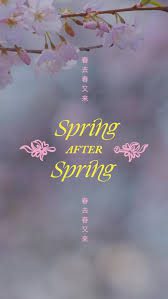
Watch Spring after Spring — click the link for more details.
https://viff.org/whats-on/spring-after-spring/
About the Author:
Ally Wang is a writer and columnist who focuses on the development of Chinese communities in North America, with particular attention to social change, cultural identity, and community life.